
 Back
Back


Moskovsky railway station

Nevsky pr., 85

 Listen
  Download
 One of the five largest railway stations in Russia
The design of the passenger station in St. Petersburg began in 1843.
From here, in the middle of the 19th century, the first in Russia, the largest at that time in Europe, double-track mainline St. Petersburg-Moscow railway extended to Moscow.
In 1844, the projects of the stations by the architect K.A. Ton were approved for both St. Petersburg and Moscow.
On November 1, 1851, the official opening of the St. Petersburg-Moscow railway and the beginning of regular passenger service took place.
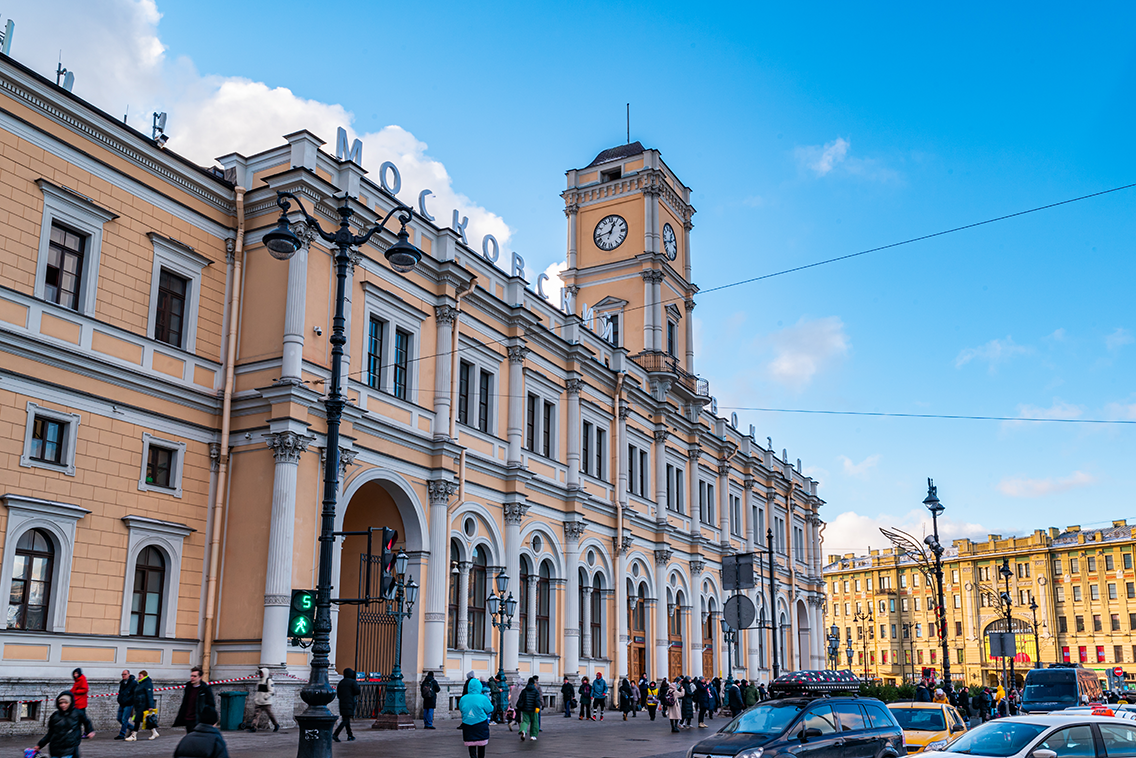
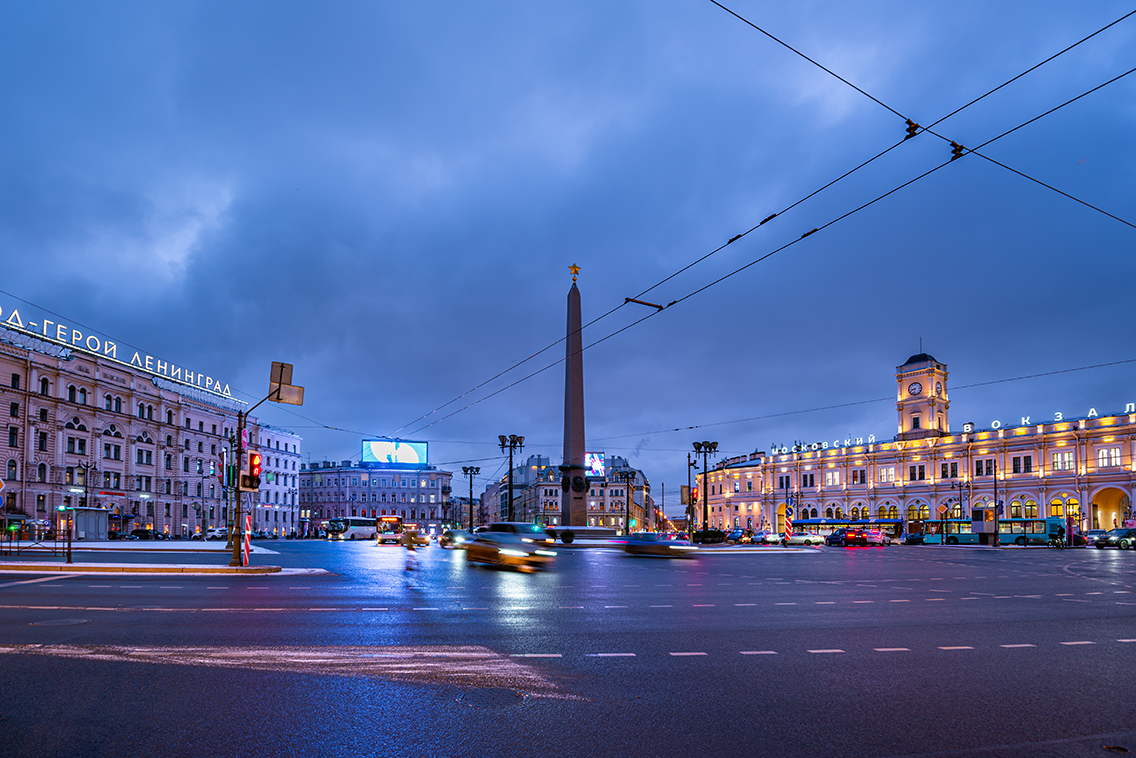
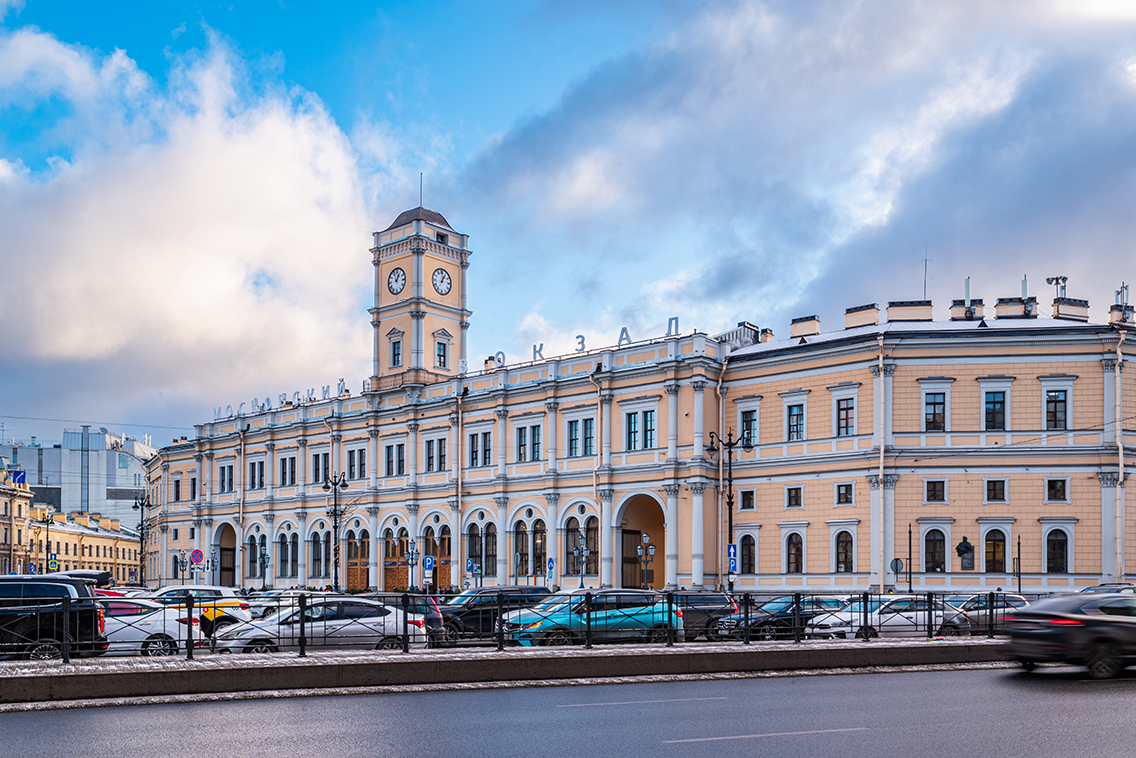
On the day of the departure of the first train, November 1 (13), 1851, the Nikolaevsky station also opened its doors. The building consisted of a main building with a facade in the early "Renaissance" style and a two-tiered quadrangular tower with a clock and a flagpole. In this appearance, the facade has survived to this day. On both sides of the building there are still three-story extensions, which once housed the station employees.
The first reconstruction of the station was carried out in 1869-1879. A separate two-story special building for baggage, a buffet for the 1st and 2nd classes appeared in the arrival yard, and on the side of the train arrivals there was a three-story wing with a hall for passengers, an arch for the passage of arriving passengers into the yard and service premises of the station.
In 1914, the building of ticket hall No. 2 was built. The author of the new project was the architect of the Institute "Lengiprotrans" V.I. Kuznetsov.
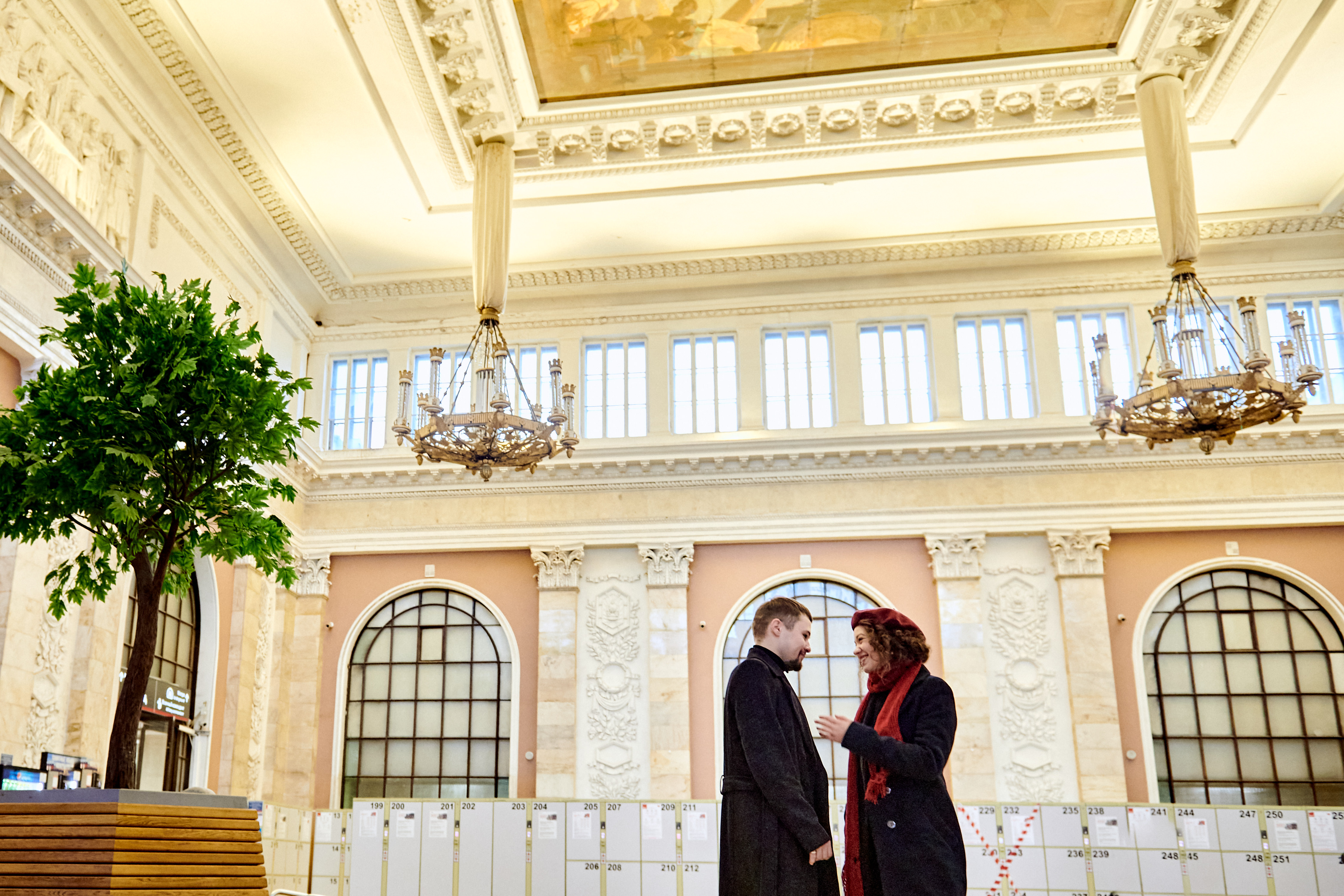
For the 100th anniversary of the October Railway, a vestibule decorated with marble appeared, and a similar ceremonial high hall, two stories high, with huge bronze chandeliers was adjoined to it.
In 1961, a building along Ligovsky Prospekt was added to the station building — the second pavilion of the Ploshchad Vosstaniya metro station.
In 1967, a new light hall was built according to the design of the Lengiprotrans Institute.
In 1977, a monument to V.I. Lenin, made according to the model of the sculptor L.A. Mess, was erected in the center of the hall.
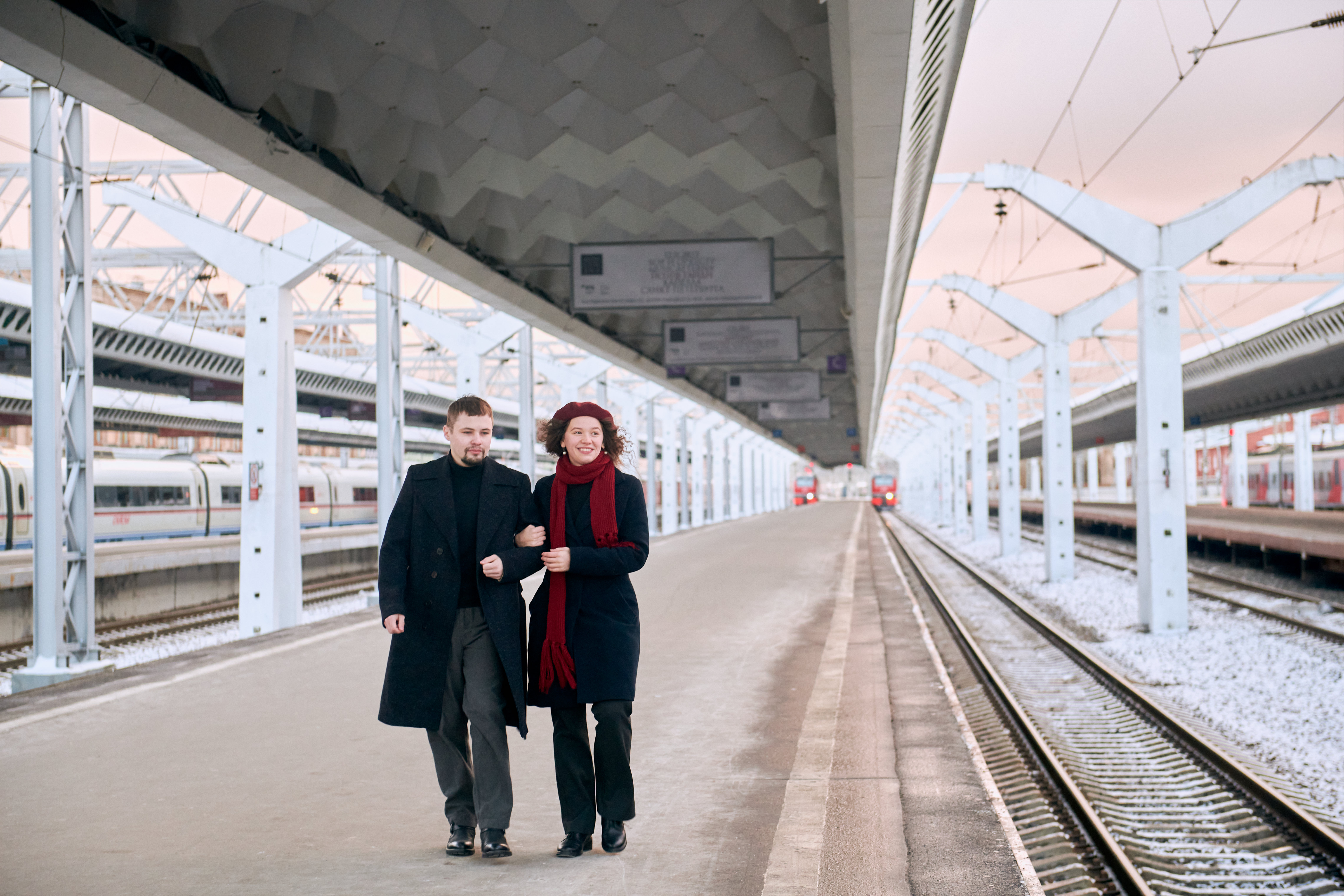
In 1975, canopies were built over platforms 4 and 5.
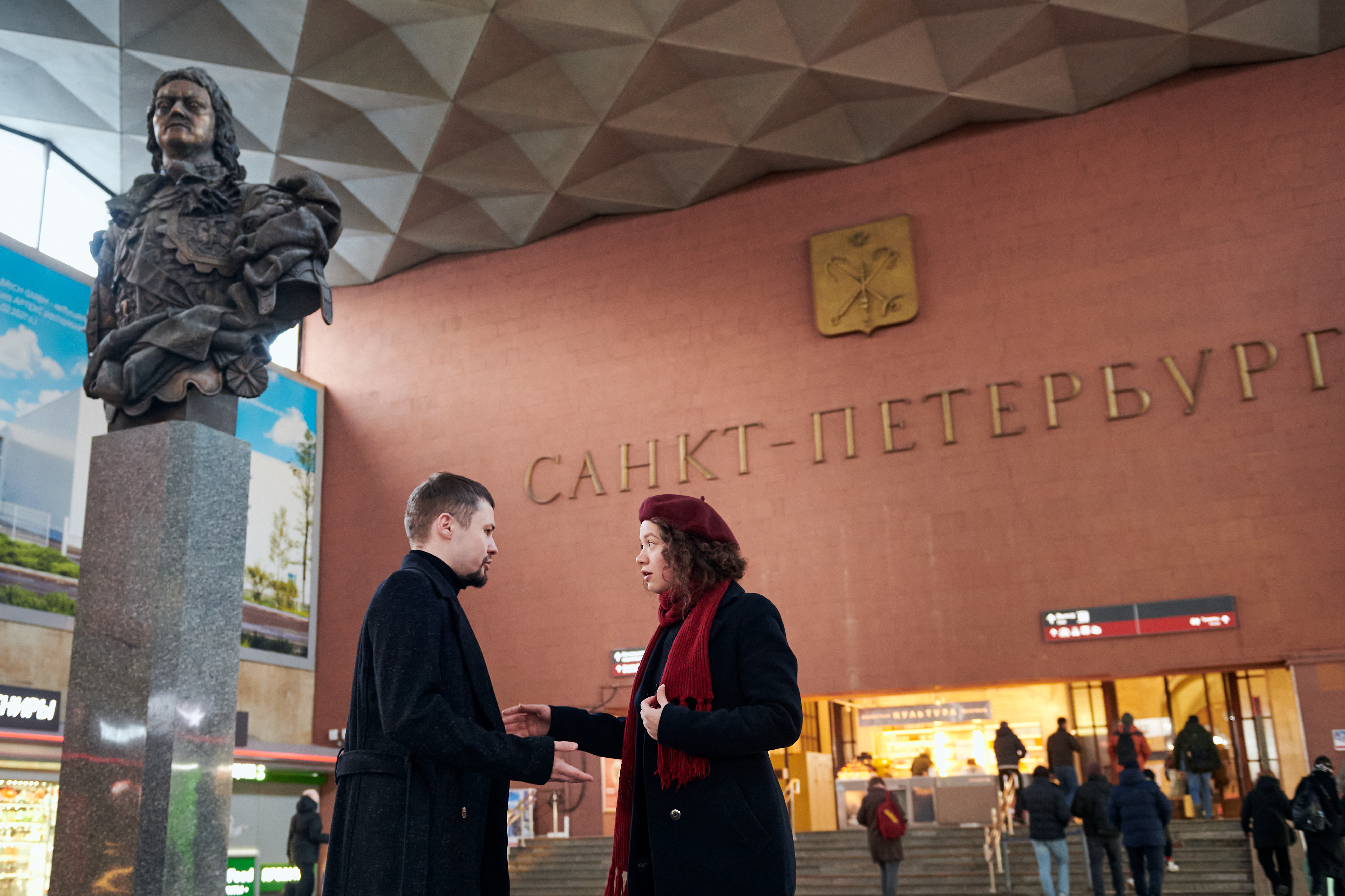
In 1993, the bust of V.I. Lenin was replaced with a monument to Peter I.
In 1996, a new ticket office center was opened, built according to the design of the Finnish company Klausen LTD.
In 2003, the ASKOPP system was introduced at the station, the passenger trade and catering system was reorganized, and canopies were installed over platforms 6 and 7.
In 2016-2018, the station was modernized as part of the FIFA World Cup.
First of all, work was carried out at the station to improve the level of transport security. The internal and external video surveillance systems were improved, and passenger flows within the complex were redirected.
In total, the station has 5 inspection points with 20 X-ray television installations, 9 of which are located in the inspection pavilions for high-speed trains. The throughput of the entrance groups at the central entrance is about 3,000 people per hour, at other posts - more than 1,000 people per hour. Also, 162 surveillance cameras are installed in the station building and on passenger platforms, after the completion of the second stage of modernization, the total number of cameras will be increased to 250 units.
Based on archival materials, the facade of the station building was restored, the roof was repaired, and the cladding of the landing stage above the platform at platforms No. 4 and No. 5 was replaced.
Work was carried out to modernize the station's engineering systems, including replacing the lighting system of the distant and suburban courtyards, architectural and artistic lighting of the central facade of the station building, and restoring the water supply and sewerage systems.
The territories of the suburban and distant courtyards were improved, including replacing the paving stones and installing ramps. Passenger platform No. 4 was also modernized.
Particular attention was paid to creating a barrier-free environment. The station has 4 ramps for passengers with limited mobility, and passenger elevators have been replaced. All waiting rooms have been equipped with places for comfortable rest. Passenger routes are marked with tactile tiles. The station also has a service to assist passengers with limited mobility, which is contacted daily for assistance in accompanying them at the station. For example, in 2017, the service received about 6,000 requests.
As a result of the modernization, the station has become more modern and technologically advanced. The visual and sound information systems for passengers have been modernized, with the replacement of existing dynamic information boards displaying information in three languages (Russian, English, Chinese) and stationary navigation signs, a public address system, a video surveillance system, and a "Talking City" system for passengers with hearing impairments.
