
 Back
Back

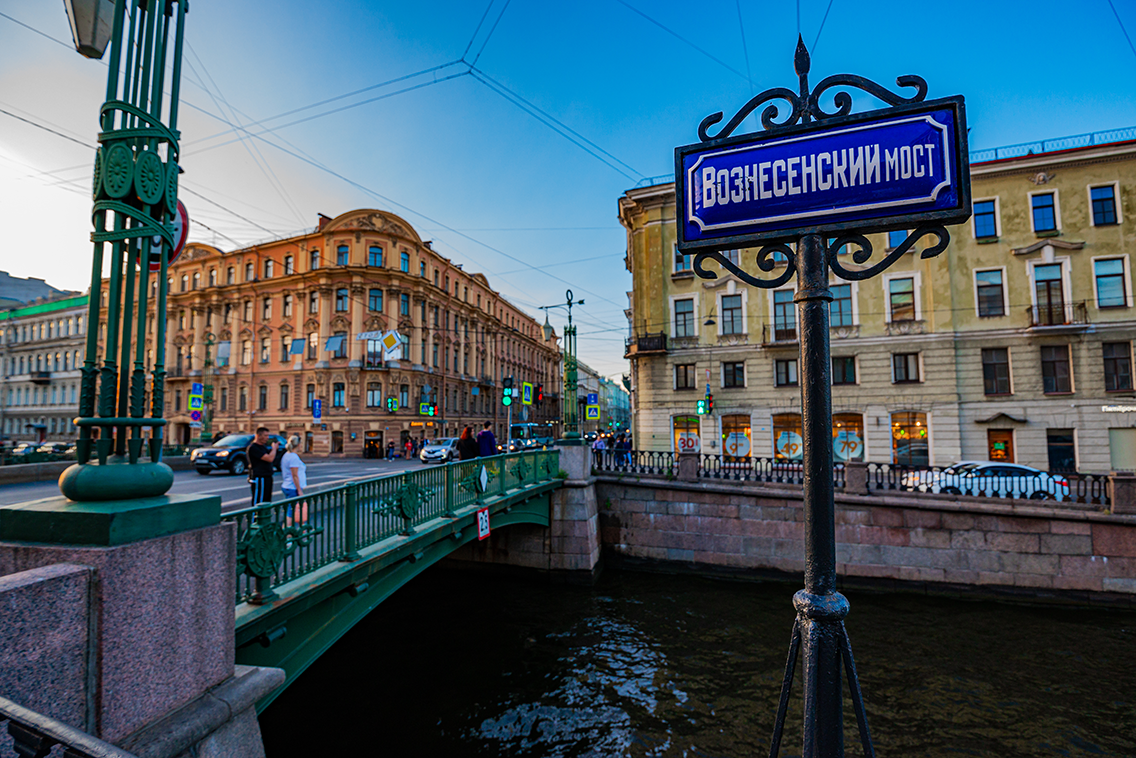
Voznesensky Bridge

Voznesensky Most

 Listen
  Download
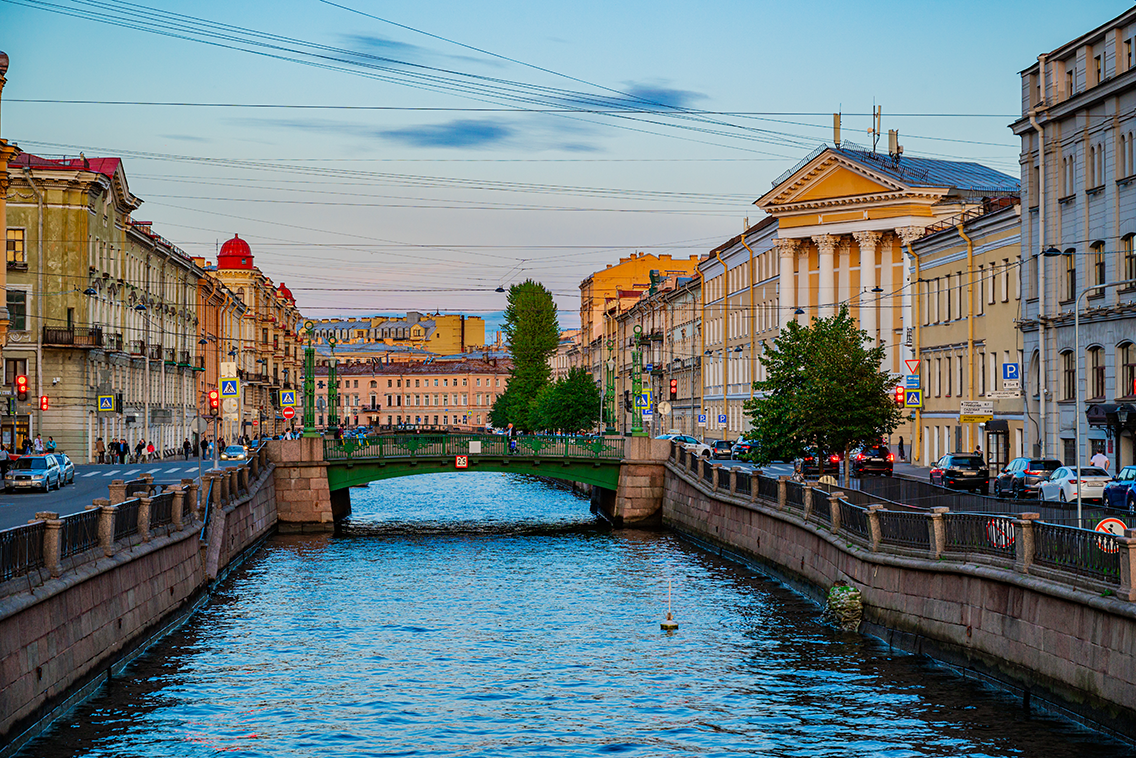
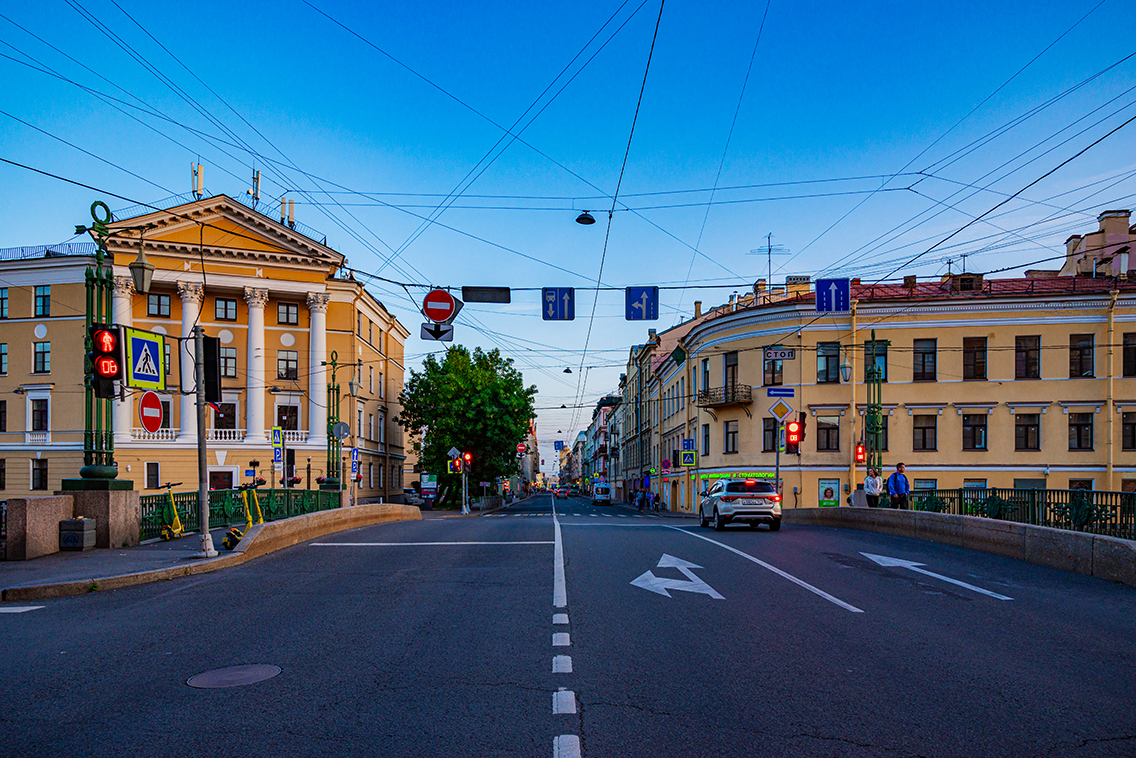
Voznesensky Bridge connects Kazansky and Spassky Islands, arching over the Griboedov Canal in St. Petersburg
The bridge got its name on August 20, 1739 after the Ascension (Voznesenskaya) Church, erected next to the bridge in the 1760s upon the project of A. Rinaldi. The church was destroyed in 1936.
In 1901, the framework of the bridge consisted of 13 girders of the trestle structure. The bridge was 12 m long and 10.8 m wide.
In 1919, the bridge was overhauled and the superstructure then consisted of 9 balks of the double-lock framed system.
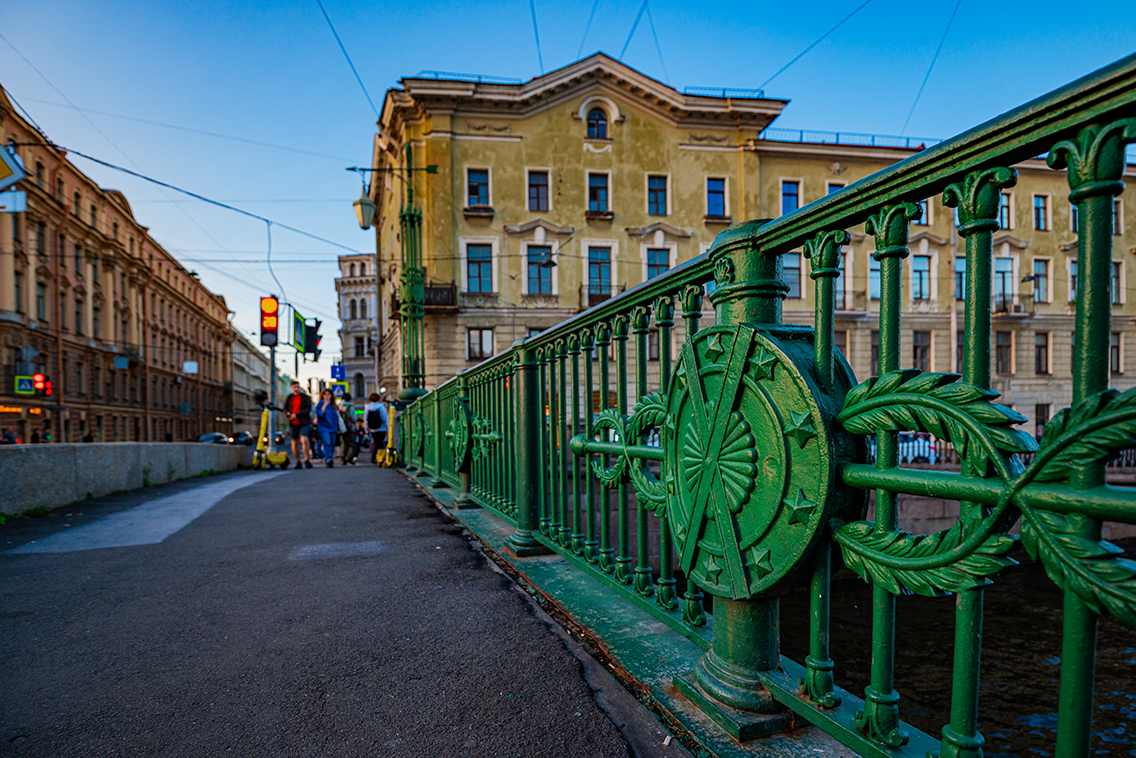
The crossing was damaged during the Great Patriotic War. In 1957, according to the project of engineer B. B. Levin and architect L. A. Noskov, Voznesensky Bridge was rebuilt, its spans becoming metal.
Many events in Dostoevsky’s novel “Crime and Punishment” unfold around Voznesensky Bridge. Raskolnikov liked to stop here, absorbed in his thoughts. Here he becomes a witness to the suicide of a woman who threw herself from the bridge into the Catherine Canal. The scene of Katerina Marmeladova going mad and forcing her young children to dance and sing in front of passers-by for alms unfolds at Voznesensky Bridge as well.
The length of the bridge is 19.3 m, the width is 20.5 m.
