
 Back
Back



Pavlovsk

Pavovsk, Sadovaya ul., 20
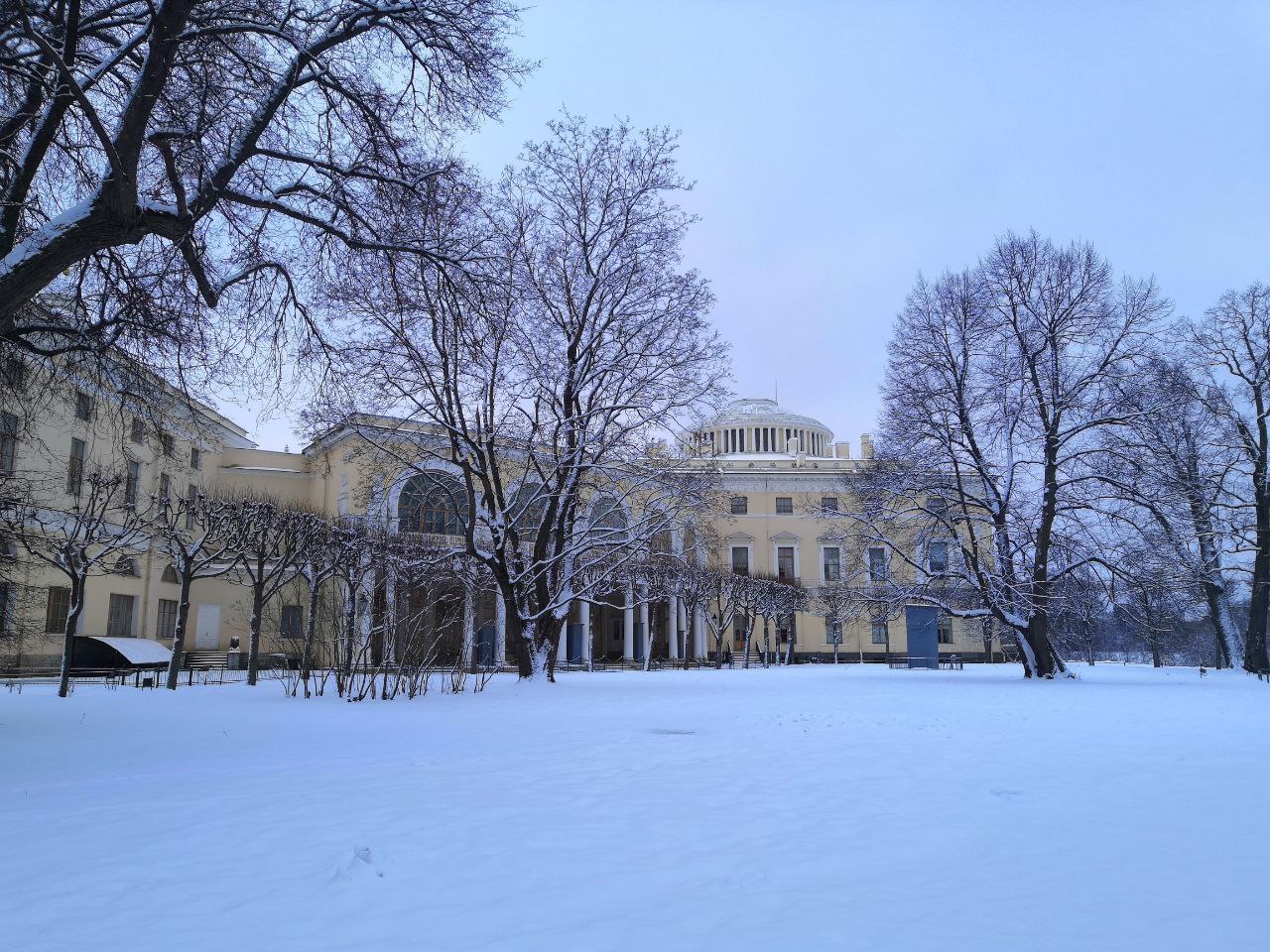



The Pavlovsk Palace and Park is a single palace and park ensemble of the Classicism era of the late XVIII – early XIX centuries.
Pavlovsk Palace and Park is a single palace and park ensemble of the Classicism era of the late XVIII – early XIX centuries. The history of Pavlovsk begins with the foundation of Pavlovsk in 1777. Initially, these were forest lands where royal hunts were held.
With the appearance of the first modest wooden palaces of Paullust and Marienthal, small gardens began to be created around them on the hilly banks of the Slavyanka. Pavilions, bridges, ruins, flower beds were typical for a Russian estate. The transformation of the forest into a park began with the appearance of C. Cameron, who created a project for a new landscape park on the banks of the Slavyanka River, which is the connecting artery of the park. It was in the second half of the XVIII century that the fashion for landscape parks appeared in Europe. It was first established in England, which is why such parks were called English.
Using Pavlovsk as an example, Cameron first developed the ideas and principles of new landscape architecture. Since the future park was a forest area, the work began with cutting clearings. Under C. Cameron, almost all the main park compositions appeared - the Palace District, the Big Star, the Slavyanka River Valley, the Menagerie and the White Birch. The large wide clearing, which is designed as the Triple Linden Alley, becomes the form of the Palace District, adjacent to the palace. Here Cameron uses the technique of regular planning, a striking example of which is the Private Garden and the Aviary Section. Later, the architects V. Brenna, A. N. Voronikhin, K. I. Rossi, without changing Cameron's plan for these areas, make their own additions and enrich their general character. In the 1790s, V. Brenna turns Pavlovsk into an imperial residence and, along with expanding the palace, he pays great attention to the park, which also expands its boundaries. Around the palace he created the Great Circles, which fit organically between the Triple Linden Alley and the Slavyanka River Valley. Along the right bank of the Slavyanka he created two new districts - Old Sylvia (1795) and New Sylvia (1800). Old Sylvia has a radial layout and is richly decorated with bronze sculpture, better known as the Twelve Paths. The first building of the pre-Paulov period was also located here - the Creek hunting lodge (not preserved), as well as the Monument to Parents, built by Cameron. Radial roads connect Old Sylvia with the surrounding park. One of the roads leads to the Amphitheater, built on a high hill above the Slavyanka. The Stone Amphitheater with the Green Amphitheater built opposite it and the view of the Piel Tower (V. Brenna, 1795) opening from its platform became another picture in the landscape area of the Slavyanka River Valley.
New Sylvia, with the right planning, even more closely preserves the effect of a natural forest, since the platforms-halls and the corridors connecting them are created in the thick of the forest. The End of the World Column was moved here to New Sylvia, and the Mausoleum of the benefactor's spouse was erected over the ravine. New Sylvia adjoins the Slavyanka River Valley and smoothly turns into the White Birch. The last major creator of the landscapes of Pavlovsk Park was the Italian decorator P. Gonzaga. Having perceived the special beauty of Russian nature, Gonzaga, using the techniques of theatrical and decorative art, managed to create landscape compositions with the effects of a perspective view. This is most clearly expressed in the White Birch and the Parade Field. If the Parade Field is a new, newly planted area of the park, then the White Birch is the result of a very complex work of a decorator who largely used tree felling to create perspective views in the landscape, thus saying a new word in landscape art. In the vast area of the Big Star, Gonzaga created an exquisite romantic corner - the Valley of Ponds with the New Chalet pavilion (not preserved) and the system of Novoshaleiny ponds.
Pavlovsk Park, located on both banks of the Slavyanka, ends with the Red Valley, which is a continuation of the Valley of the Slavyanka River and was designed by P. Gonzaga. The Red Valley ensemble includes romantic buildings created by Cameron - the Ruins and the Krasnodolinny or Elizavetin Pavilion, as well as the Novosilviysky and Krasnodolinny bridges.
