
 Back
Back

Bolshoy Konyushenny Bridge

Bolshoy Konyushenny most
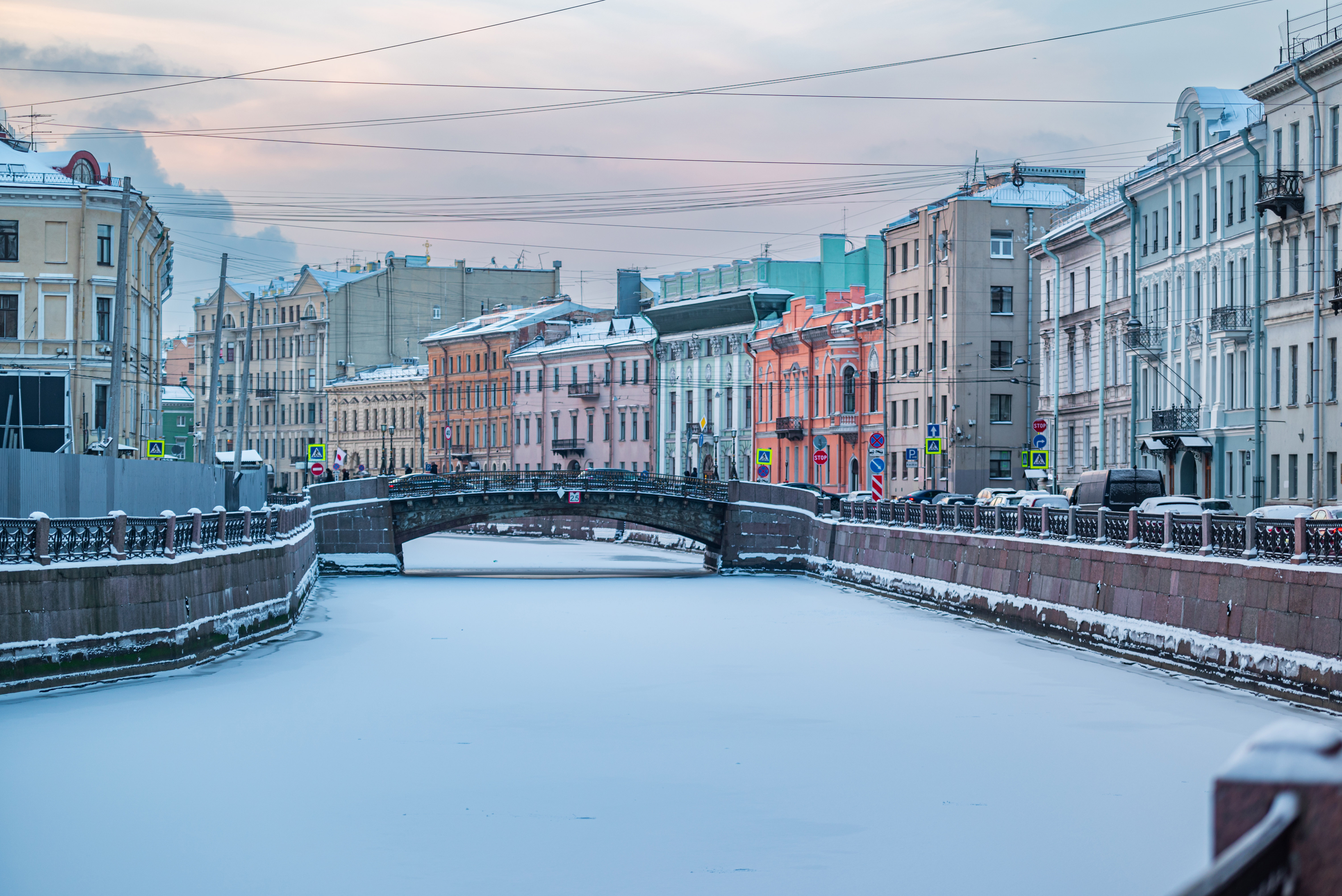
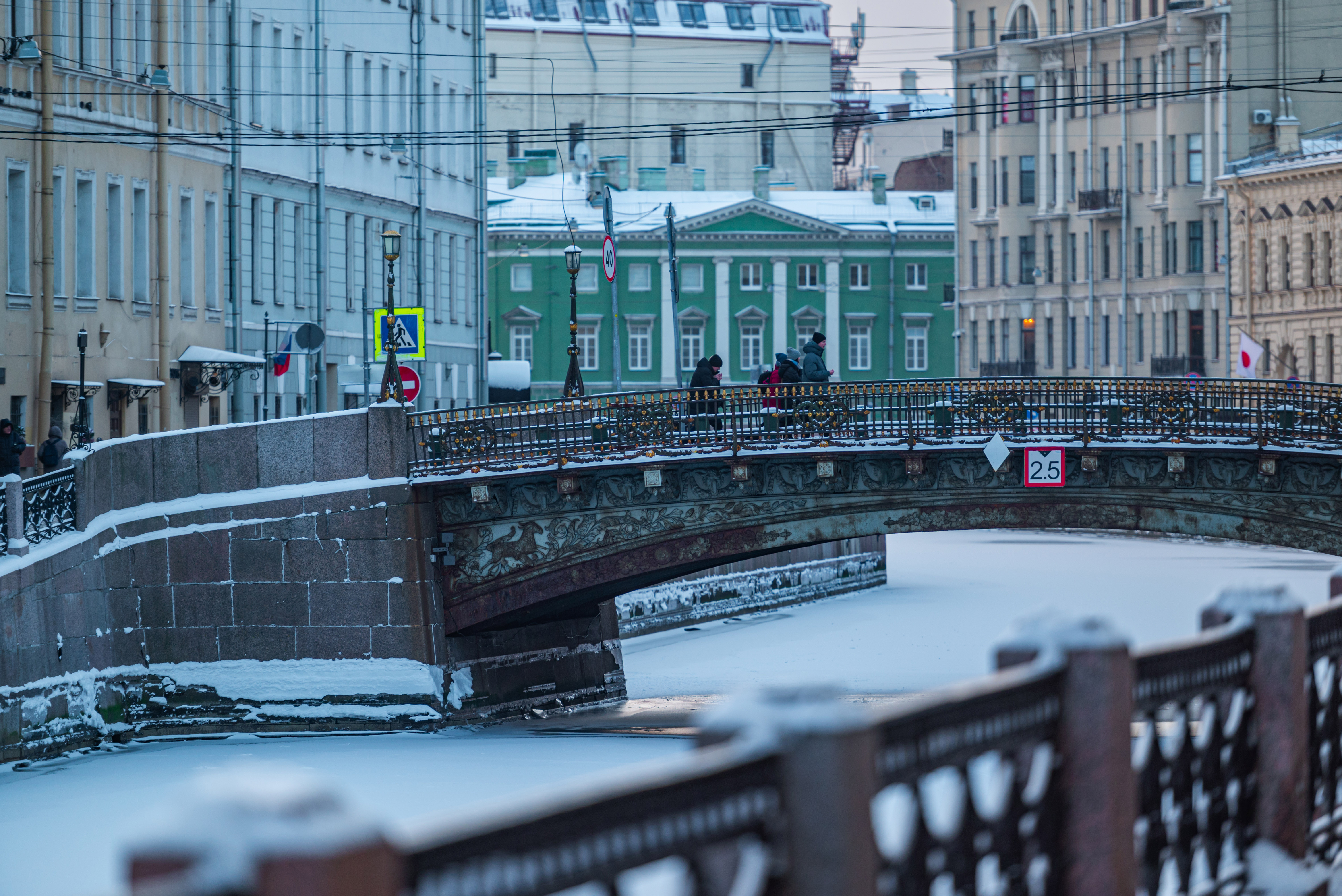
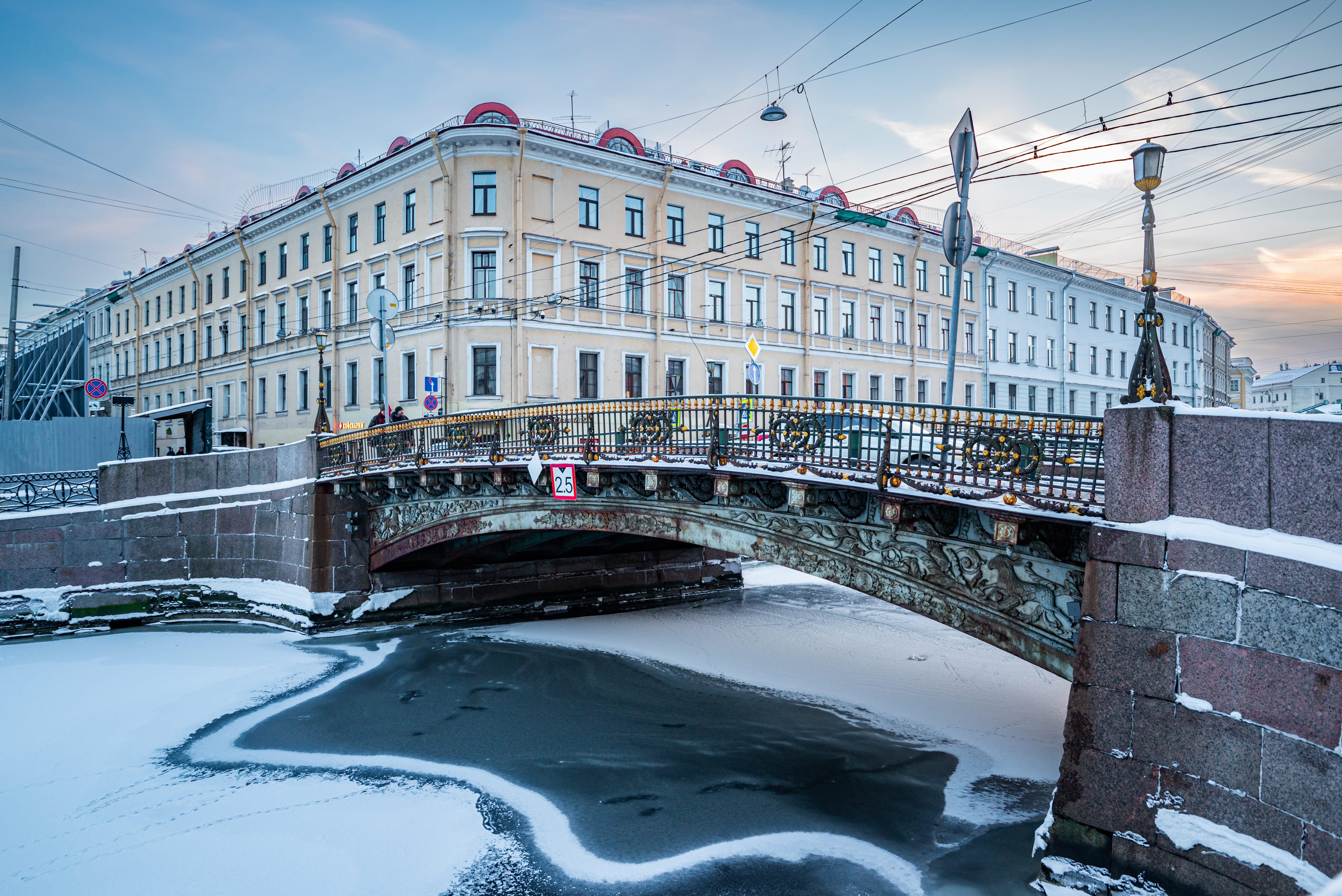
The Bolshoy Konyushenny Bridge connects the Kazansky and 1st Admiralty Islands across the Moika River in the Central District of the city
Connects Konushenniy and Moshkov Lanes. The name of the bridge comes from the building of the Main Imperial Stables, located on the left bank of the Moika River, house No. 44.
Initially, a wooden drawbridge was built here by Herman van Boles in 1753. The bridge was covered with boards and, according to the fashion of the time, painted "under the stone".
In 1828, the bridge was replaced with a new single-span arched bridge made of cast-iron tubings connected with bolts. The crossing project was carried out by engineers E. A. Adam, V. K. Tretter and V. I. Geste. The project is unique in that these tubings were originally intended for the construction of the Malo-Konyushenny Bridge, but due to the adoption of a new project, they were not needed there.
To reduce the weight of the tubings, elliptical holes were made in their side walls at the suggestion of P. P. Bazen. The cast-iron arch rests on the abutments, which are faced with granite blocks of regular cut. At the base of the abutments are wooden grillages resting on piles.
The facades of the bridge's superstructure are decorated with cast-iron sheets, these sheets are decorated with artistic ornamentation. At the entrances to the bridge, floor lamps with lanterns were installed. The bridge lattice is made in the form of frequently placed darts with overhead reinforcement of intertwined wreaths, pierced with spear-shaped poles with tips, and supporting the railings of figured brackets. The lamp posts are raised above the parapets of the embankments by granite parapets on relatively high cast-iron pedestals.
In 1935, due to deformation in the supports and superstructure, the bridge was repaired according to the design of engineers M. I. Zhdanov and A. D. Sapershteyn. A reinforced concrete vault was laid over the cast iron one, and the barriers between the sidewalks and the roadway were removed.
In 1951, under the supervision of the architect A.L. Rotach, the floor lamps with lanterns and gratings were restored.
