
 Back
Back


Tavrichesky Palace

Shpalernaya ul., 47
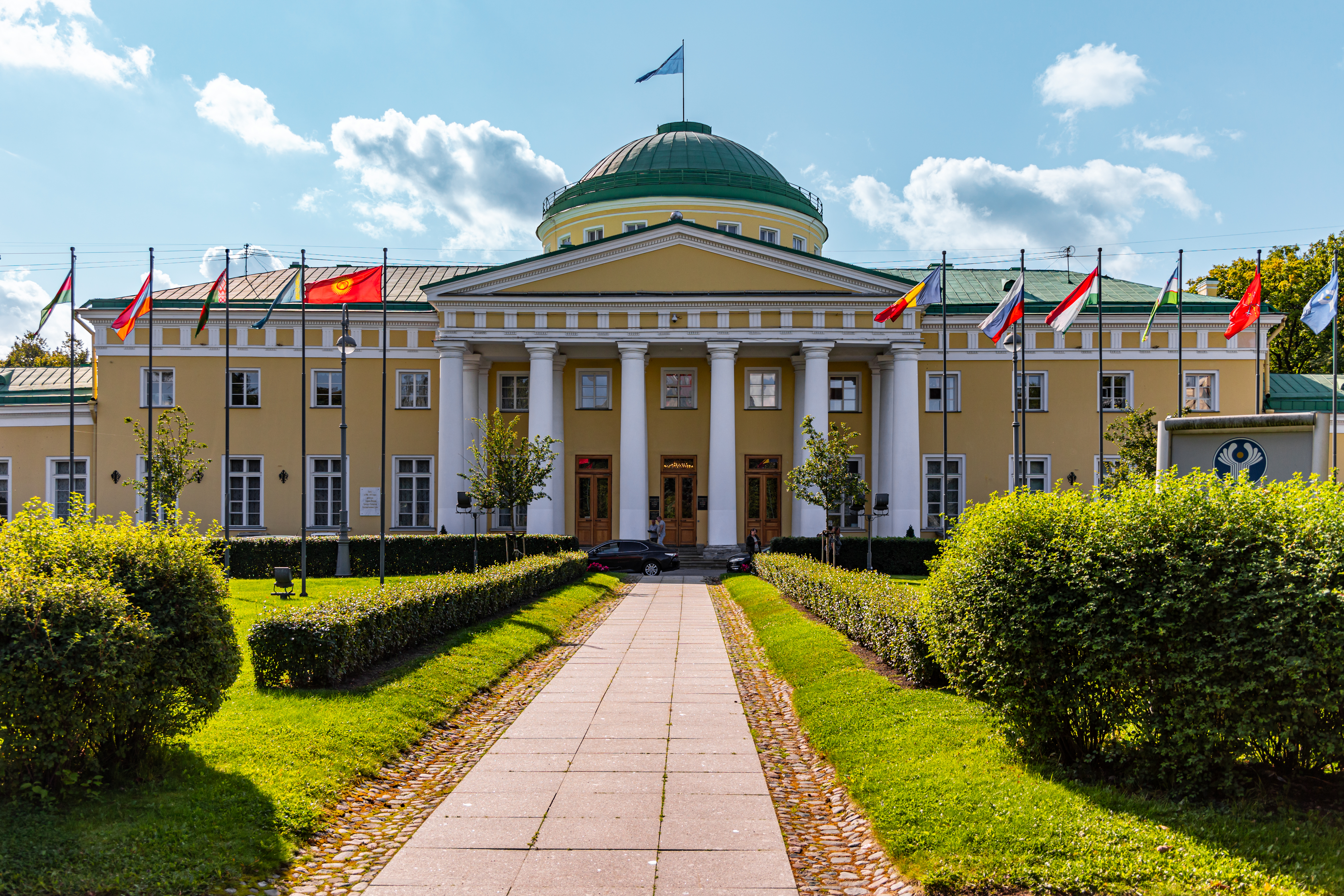
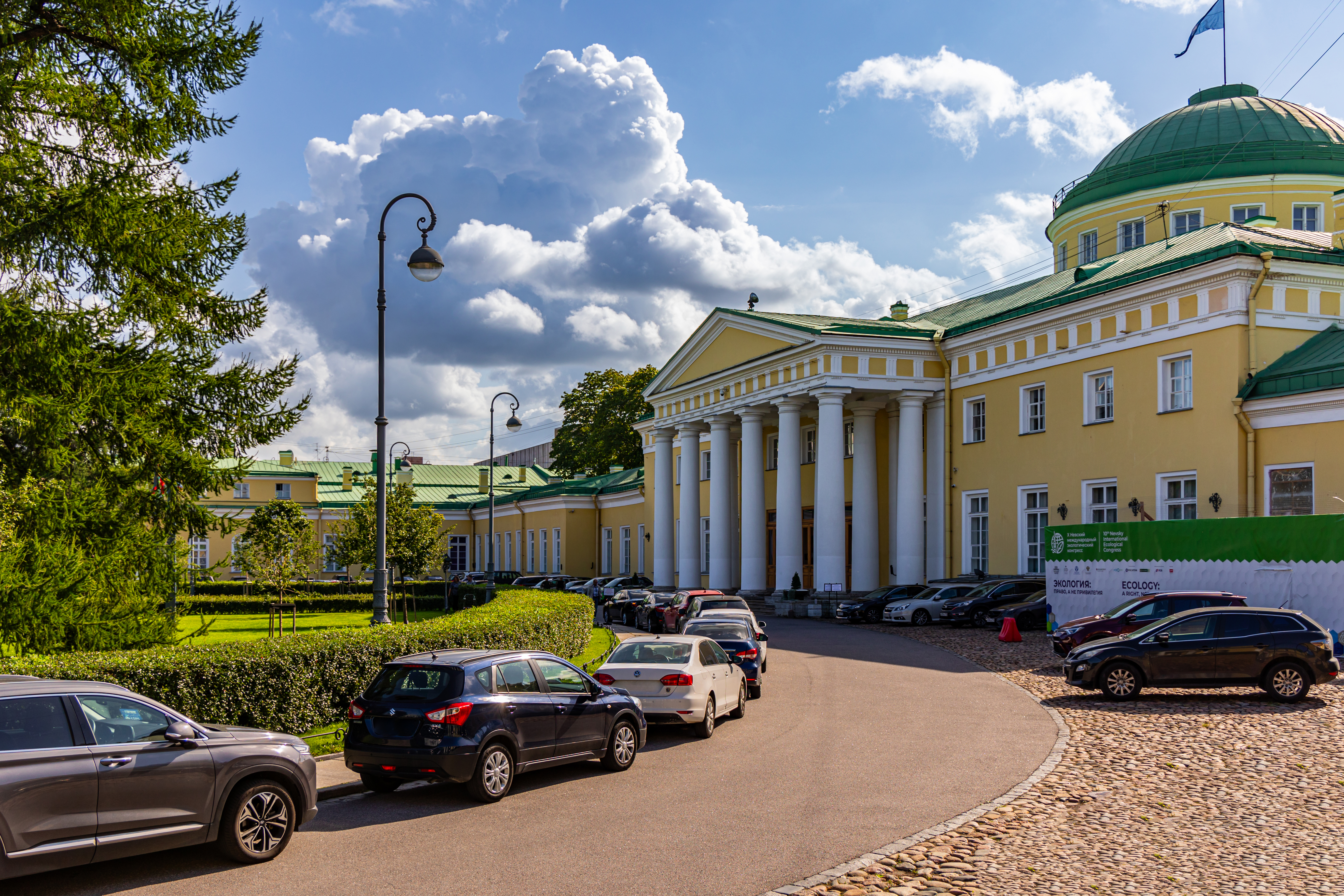
The Tauride Palace is the St. Petersburg residence of Prince Grigory Potemkin-Tavrichesky
It was built in the classical style between 1783 and 1789 according to the design of the architect I. E. Starov.
The palace is located on Shpalernaya Street, in the block between Potemkinskaya and Tavricheskaya Streets. Behind it is the Tauride Garden.
The Tauride Palace was built by order of Catherine II for her favorite, His Serene Highness Prince G. A. Potemkin. About 400,000 rubles in gold were spent on the construction and decoration of the palace. The palace received its name from the title of Prince of Tauride, which was granted to the temporary worker in 1787, after the annexation of Crimea (Taurida) to the Russian Empire. One of its decorations was an antique statue of Venus Tauride, brought to Russia under Peter I.
In the depths of the front courtyard, separated from the street by a low fence (1792-1793, architect F. I. Volkov), there is a central two-story building with a six-column portico, crowned with a flat dome on a low drum; the smooth planes of the walls are cut by high windows and completed with an entablature of a strict design with a frieze of triglyphs. The main building is connected by one-story galleries with side two-story buildings, limiting a wide front courtyard.
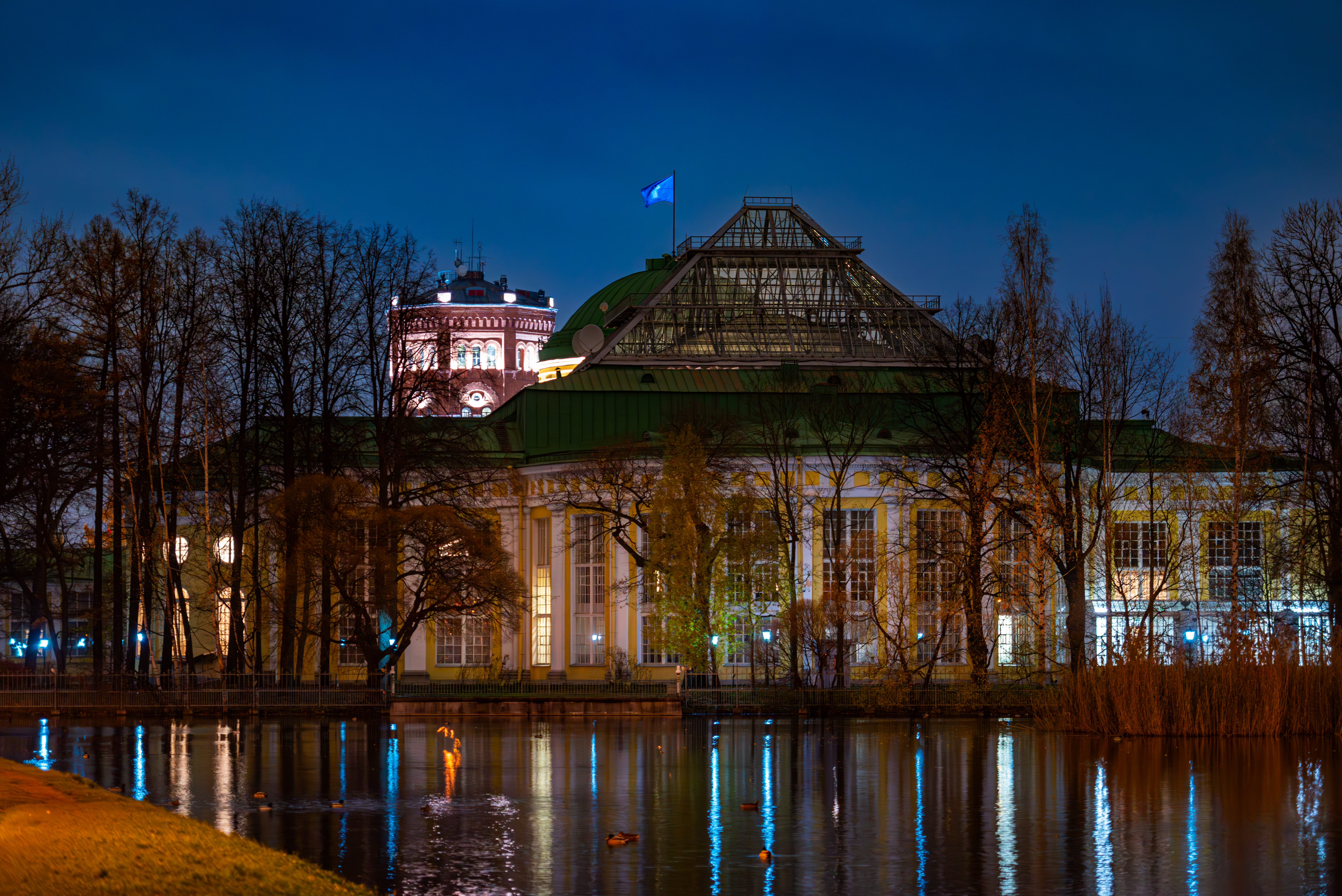
Initially, the Tauride Palace was open to the Neva, from which a canal ran, ending in a harbour-ladle. This architectural perspective, which was part of the panorama of the Neva banks, existed before the construction of the water tower and other structures of the Central City Water Supply Station opposite the palace in 1858-1863 (architects I. A. Merz, E. G. Shubersky).
The architectural complex of the Tauride Palace also includes the so-called house of the garden master, built in 1793-1794 (architect F. I. Volkov) for V. Gould. The main facade of the two-story central building is marked by a Doric portico, the garden facade - a semi-rotunda with a round balcony; two small wings are crowned with domed towers.
In 1783-1800, the Tauride Garden was laid out behind the palace by the garden master V. Gould.
Under Emperor Paul I, the Horse Guards Regiment was stationed here. The Winter Garden became a stable, and the palace halls were converted into a riding school and barracks. Naturally, with such use, the palace quickly began to deteriorate. Emperor Alexander I restored the Tauride Palace. At the beginning of the 19th century, the historian Karamzin lived and died here. The Persian prince Khosrow Mirza and the Swedish and Norwegian prince Franz Joseph also stayed at the estate for a long time.
At the beginning of the XX century, the Tauride Palace became the venue for meetings of the State Duma. For this purpose, the interior had to be rebuilt again, and the Winter Garden was converted into a meeting hall.
In February 1917, the Provisional Committee of the State Duma was located here, then the Provisional Government, then the Petrograd Council of Workers' Deputies arose, and before moving to Smolny, the All-Russian Central Executive Committee of Soviets met.
In 1918, the All-Russian Constituent Assembly met in the Tauride Palace, the Third All-Russian Congress of Soviets, and the Seventh Congress of the RCP(b) were held. In the 1930s, the All-Union Agricultural Communist University was located here.
The palace was restored after the Great Patriotic War, and the Leningrad Higher Party School moved here (the project for adapting the building was designed by architect I.G. Kaptsyug; the school occupied the palace premises until 1990).
In the XXI century, the palace is the headquarters of the Interparliamentary Assembly of Member Nations of the Commonwealth of Independent States. It is also home to the St. Petersburg branch of the Mir television and radio company.
