
 Back
Back
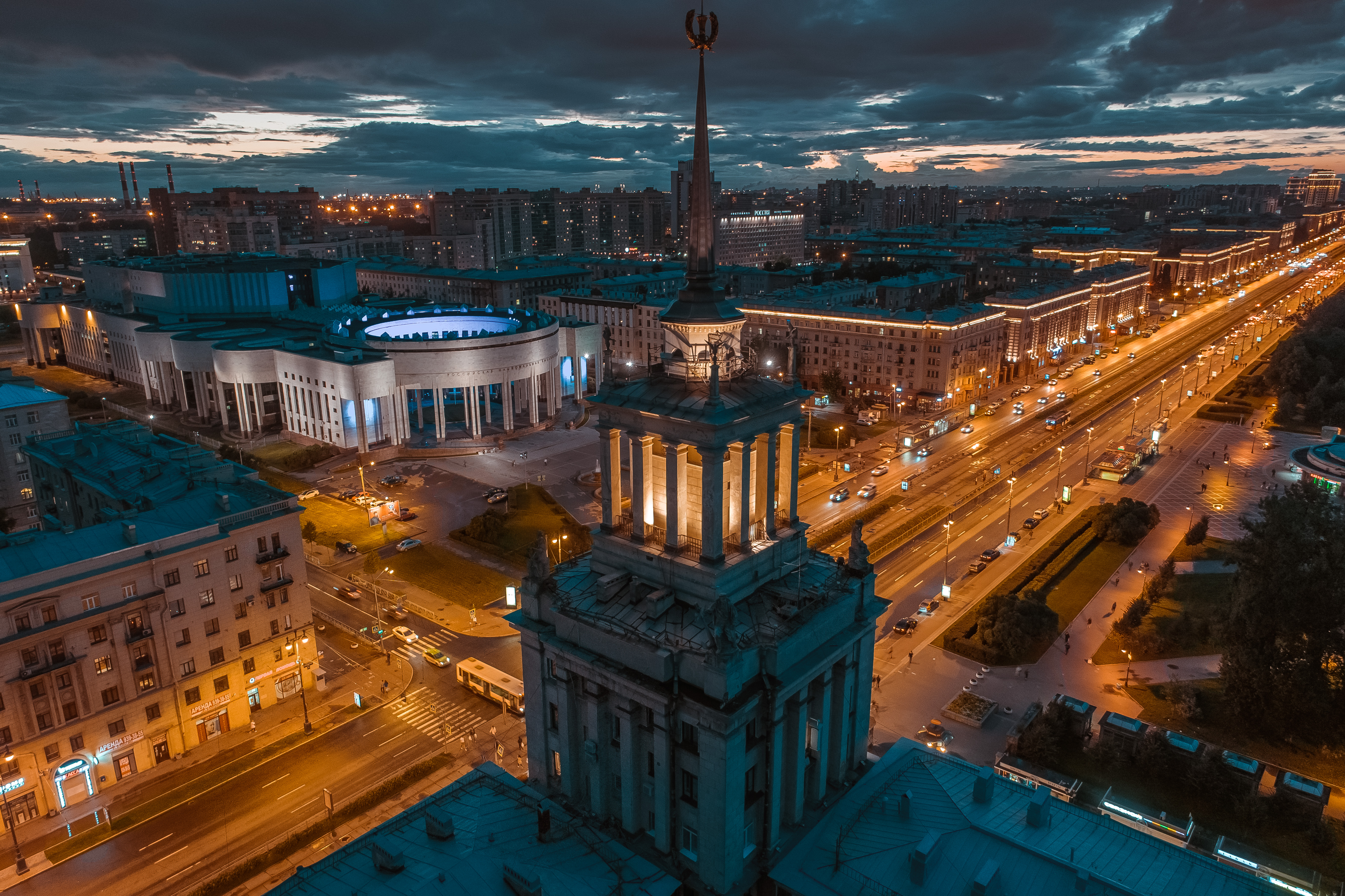
Moskovsky Prospect

Moskovsky Prospect
The prospect originated at the end of the XVIII century as a road leading to Tsarskoye Selo. Now Moskovsky Prospect is the main highway of the Moskovsky district of Saint Petersburg
Moskovsky Prospect is more than ten kilometers long. It runs from Sennaya square to Pobedy (“Victory”) square. Since the road was historically formed on the site of the old road connecting the city with Novgorod and Moscow there used to be a guardhouse with guards on the site of the Moscow gates where travel documents were checked. Back in the first half of the XVIII century the construction of country estates began on the sides of the future prospect and in the 1770-s mileposts were installed along the road, many of which have survived to this day. The first such milepost with a sundial can still be seen today in front of house № 17 on Moskovsky Prospect.
At the beginning of the XIX century this highway began to be called Tsarskoselsky Prospect. At the same time construction of the building of the current University of railways and communications, the complex of the Technological institute, the Moscow Triumphal Gates authored by the famous Russian architect V. P. Stasov, began. In 1835 the construction of the Obvodny canal which crosses the modern Moskovsky Prospect was fully completed. At the end of the XIX century a city park of horse-drawn railways appeared on the highway; in 1907 it was replaced by a tram park.
At the beginning of the XX century the city territory ended at the intersection of Moskovsky Prospect and Roshchinskaya Street. Further away the city outskirts began. In 1914, wooden food warehouses, popularly called "Badaevskiye", appeared on the territory between Moskovsky Prospect, Chernigovskaya and Kievskaya streets. After the Revolution the city began to develop actively in the southern direction; in 1925 the developed area extended to the modern Aviacionnaya Street. In 1933 the “Elektrosila” plant began to be built, which produced power units for power plants. After the Great Patriotic war the southern part of the Prospect was built up, the buildings were made in the style of Stalin neoclassicism. A significant contribution to the design of this part of the highway was made by the architect S. B. Speransky. The prospect acquired its modern name in 1956.
In the XX century many industrial enterprises were created on Moskovsky Prospect and eight metro stations were opened. Currently the prospect is the fourth longest street in Saint Petersburg after Sofiyskaya Street, Obukhovskoy Oborony Prospect and Engelsa Prospect.
Many attractions and interesting buildings of various architectural trends are placed at Moskovsky Prospect: Moscow Triumphal gates, erected in honor of the victory in the Russo-Turkish war, the Technological Institute, Moscow Victory park, a number of apartment buildings, the Russian National library and much more. One of the pearls of the Prospect is the Novodevichy monastery and its cemetery. Many prominent figures of the city and the country are buried here.
