
 Back
Back


Academy of Russian Ballet named after A. Ya. Vaganova

Architect Rossi ul., 2
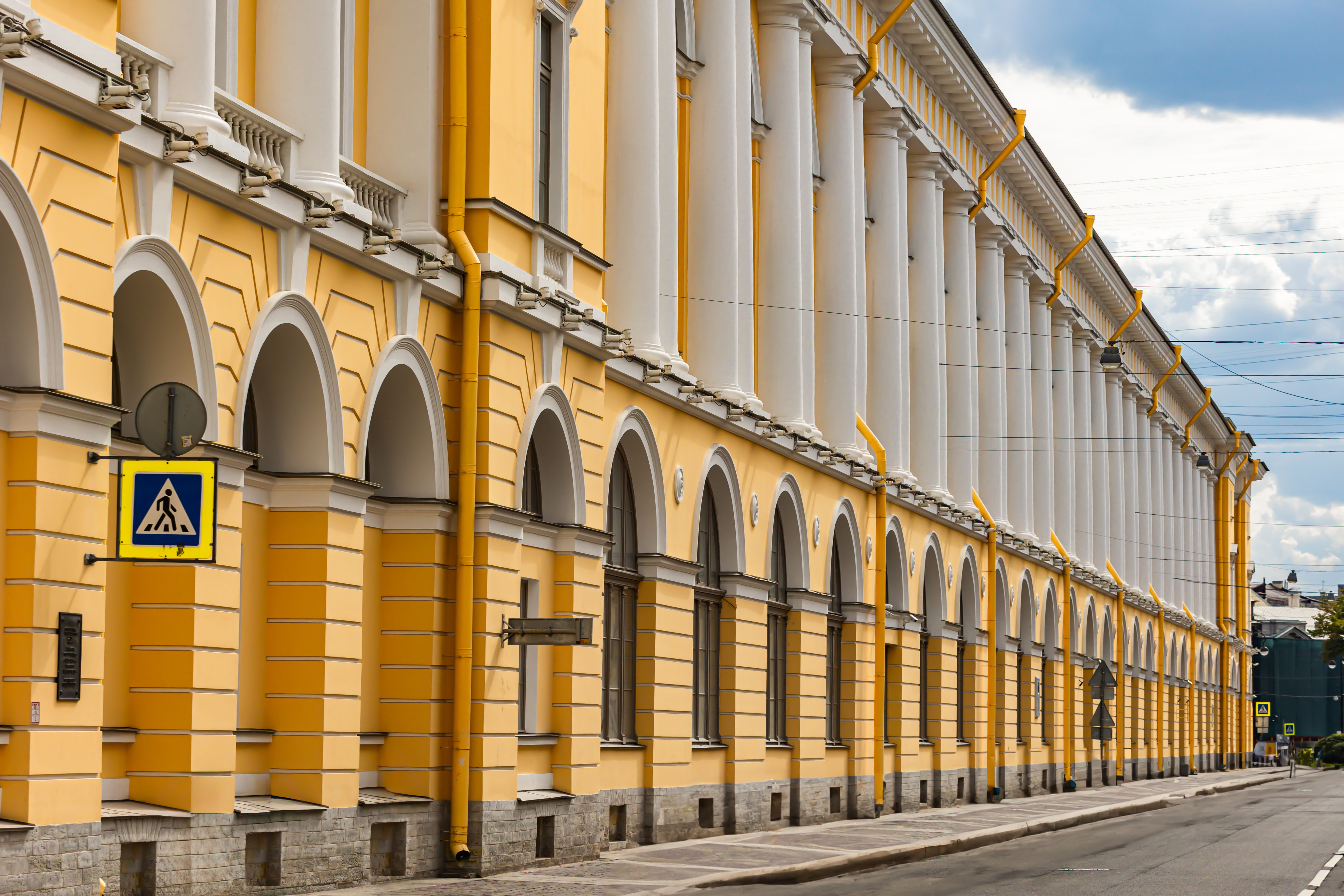
The first teacher of the school was the French dance master Jean Baptiste Lande. And the first students were 12 girls and boys, children of palace servants.
At the end of the XVIII - beginning of the XIX centuries, the first Russian ballet master Ivan Valberkh (Lesogorov) worked here. Charles Louis Didelot, the founder of the modern method of classical dance, taught at the school for about 20 years - during this time he managed to ensure that Russian ballet became part of the European one. Moreover, at that time, Russian ballet surpassed many foreign ones, and classical dance became the core of the educational program of the Academy.
Another world-famous Frenchman, Jules Perrot (the greatest ballet master of the Romantic era), arrived in St. Petersburg at the invitation of the Directorate of Imperial Theaters.
Later, Marius Petipa and Enrico Cecchetti, as well as many other excellent teachers, began teaching at the school.
Many ballet masters lived near the Academy - for example, Didelot chose a house on the corner of today's Rubinstein Street and Nevsky Prospect, and Marius Petipa rented an apartment literally "around the corner" - on Fontanka Embankment, 51-53.
The Academy was made famous not only by famous ballet masters, but also by talented graduates. Anna Pavlova introduced the whole world to Russian ballet, and Marina Semenova proved to her native country in the difficult 1920s that classical ballet was needed.
The success of the Academy in different years was supported by the work of Galina Ulanova, Fairy Balabina, Natalia Dudinskaya, Vladimir Ponomarev, Matilda Kshesinskaya, Vaslav Nijinsky, Mikhail Baryshnikov, Ulyana Lopatkina.
And, of course, we cannot fail to mention Agrippina Yakovlevna Vaganova. A former graduate of the Theatre School, she returned here after the revolution as a teacher and created the best system of teaching classical dance in the world.
The Academy building was originally built as a tenement house for the Department of Appanages of the Ministry of the Imperial Court. In 1836, the imperial order was received to transfer the building to the Directorate of Imperial Theatres. After changing the façade (the arcades were bricked up, the arches were turned into window niches) and the interiors, made according to the design of the architect A.K. Kavos, the St. Petersburg Imperial Theatre School moved in. Thanks to this, house No. 2 became one of the centers of theatrical life in St. Petersburg.
Up until 1917, the part of the building adjacent to Ostrovsky Square housed the Directorate of Imperial Theatres, whose premises were occupied by the St. Petersburg Museum of Musical and Theatre Arts in 1918. In addition to it, today this part of the building houses the St. Petersburg Theatre Library - a unique collection of materials on the history of the theatre in the world. The middle part of the building houses the Mariinsky Theatre Music Library, founded in the early 19th century. In the part of the building adjacent to Lomonosov Square, the Orthodox Church of the Holy Trinity was restored in 1998. The church was founded in 1806 and was the house church of the theatre school and the Theatre Directorate.
In 1941-1945, the headquarters of the Leningrad Military District was located in building No. 2, for which a concrete bunker was built in the middle part of the building.
