
 Back
Back


Museum of St. Petersburg Art of the XX-XXI Centuries

Nab. kanala Griboyedova, 103
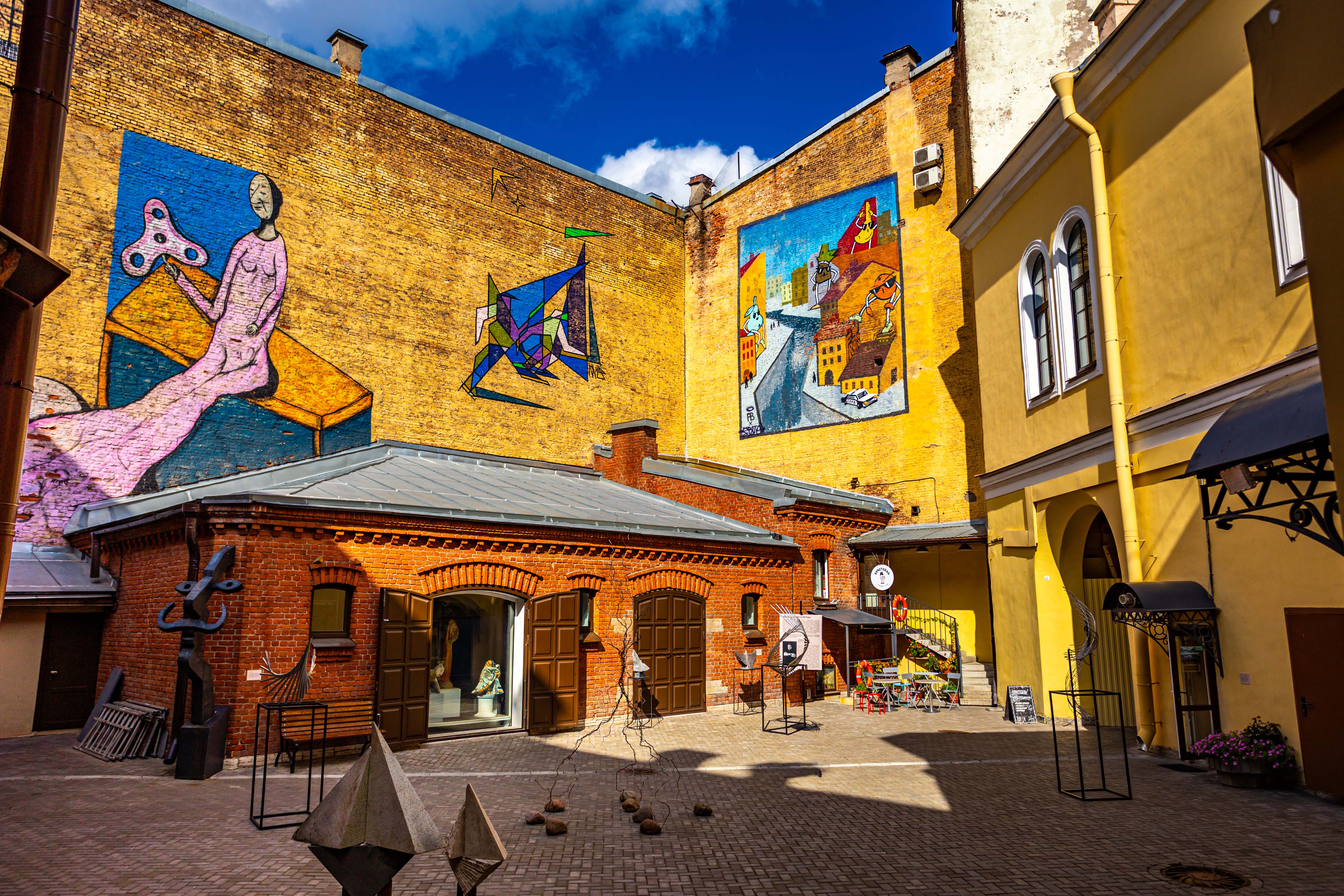
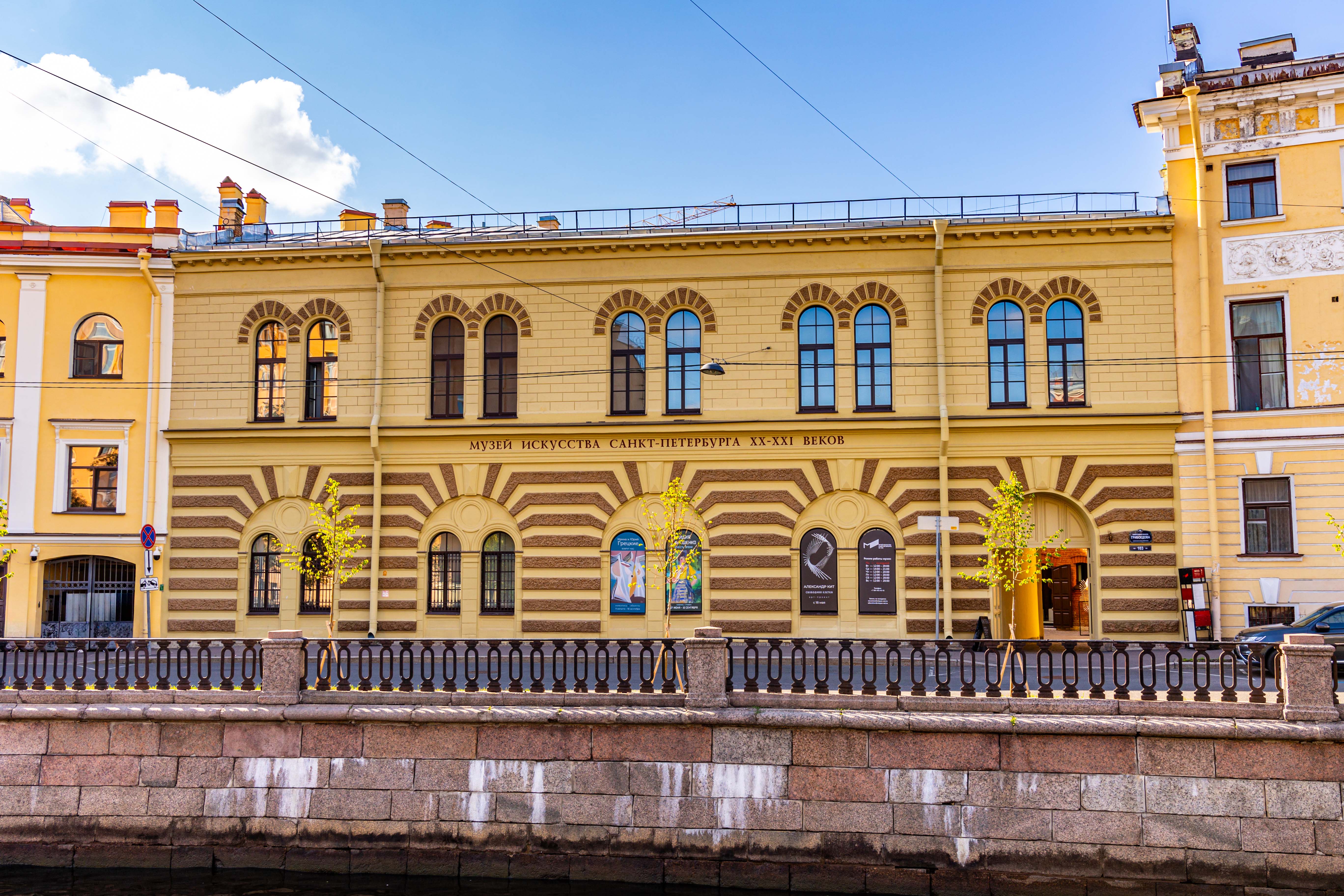
Officially, as a new art institution, the Museum was established in December 2015. However, it has been conducting its artistic activities since the foundation of the collection. Its history began 27 years ago, in 1990, when by the resolution of the Board of the Main Department of Culture of the Executive Committee of the Leningrad City Council, the Central Exhibition Hall "Manege" was assigned the responsibility of forming a fund of contemporary art with the aim of creating a Museum in the city. A department was created within the structure of the Central Exhibition Hall "Manege", which from the first day of its establishment carried out a serious set of tasks on the acquisition, registration, storage and public presentation of art objects related to the culture of St. Petersburg.
Currently, the Museum is located in the historical center of the city - on the embankment of the Griboyedov Canal, 103, a two-minute walk from the Mariinsky Theater, the Nikolay-Bogoyavlensky Naval Cathedral, the Yusupov Palace and other famous sights of St. Petersburg.
The building that houses the Museum was built in the second half of the XIX century according to the design of the architect Zakhar Krasnopevkov. Once upon a time, there was a Constituent Assembly House here, which combined a police station and a fire department. At the end of the XIX century, the building was rebuilt and the police station gave way to a police archive. And it was this change of owner that influenced the future of the building. In 1917, the police archive was destroyed and burned. As a result of the fire, the building was badly damaged. It was restored only in 1929 and adapted for the Leningrad Party Archive. Then it was replaced by various organizations - a printing house, the City Court archive, the Small Manege. And in December 2015, the Museum of Art of St. Petersburg of the XX-XXI Centuries (MISP) moved in here, which not only completely changed the external architectural appearance of the building, but also filled its interior with new content. The nerve of dynamic modern culture has drawn new heroes into the process of life — artists, musicians, actors.
Currently, there is no permanent exhibition in the Museum. The building, which includes various structures, is subject to reconstruction. However, the Museum carries out extensive exhibition activities based on its own collection, placing various temporary exhibitions on four sites of the main building.
The courtyard is also a space for various cultural events and interactive art projects — concerts, theater productions, performances, film screenings.
Exhibition activities are also carried out outside the Museum — in various cities of Russia and abroad. The Museum's traveling exhibitions were held in Greece (Athens, Thessaloniki), Italy (Rome, Turin), Germany (Hamburg), Mexico (Mexico City).
An educational center operates on the territory of the Museum. An extensive program has been developed for holding lectures, master classes, creative seminars, interactive author's excursions, taking into account different age categories.
The museum also carries out active research activities. A number of albums and catalogues introducing the collection of museum funds have been published.
In 2017, the Volunteer Center was opened at MISP, thanks to which young people were given the opportunity to participate in the artistic life of St. Petersburg and contribute to the development of the culture of our city.
The Museum's storage facility is located in one of the wings of the architectural complex. Currently, the collection contains 3,000 works of painting, graphics, sculpture, objects, and installations. The collection represents various artistic movements and styles of St. Petersburg art over two centuries - from the avant-garde of the 1920s, socialist realism of the post-war period, the searches of the "left" wing of the Union of Artists and the underground of the 1960-1970s to the artistic phenomena of perestroika and post-perestroika times, including today's trends.
