
 Back
Back
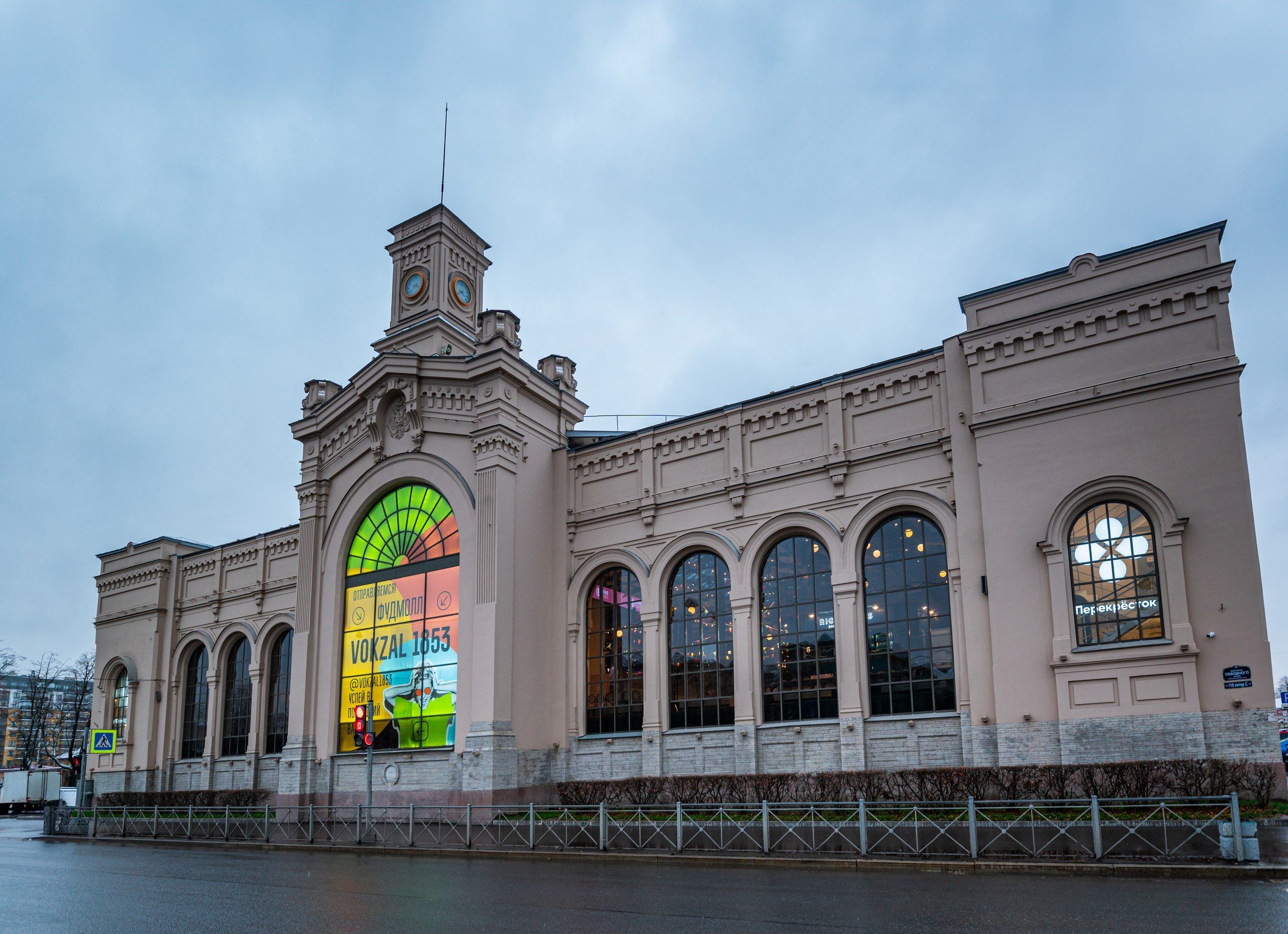

Warsaw railway station building

Obvodnogo Canala nab., 118
Varshavsky Station became the third station in St. Petersburg after Tsarskoye Selo and Nikolaevsky. Of the two options for the development of railways in Russia (western and southern), the first was chosen. In November 1851, Emperor Nicholas I issued a decree: “1. Build a railway from St. Petersburg to Warsaw. 2. Call this road the St. Petersburg-Warsaw Railway. 3. Start work in 1852, starting from both St. Petersburg and Warsaw.”
The first building of Varshavsky Station was built in 1851-1853 according to the design of K. A. Skarzhinsky. According to some sources, academician of architecture N. L. Benois also took part in this. The building looked like an ordinary residential building, but its center was distinguished by five large doorways. A little later, a locomotive depot was built nearby, which still exists today.
As the construction of the highway continued, the old building no longer met the operating requirements. The new building of the Varshavsky railway station was erected according to the design of P. O. Salmanovich. The height of the Varshavsky railway station with the tower was 51.5 meters, the length was 283 meters, and the width was 54.4 meters. There were five platforms at the station, two of which were suitable for the landing stage. Varshavsky railway station could simultaneously receive up to ten trains. The right platform under the landing stage (if you look from the canal) was intended for receiving trains, the left one - for sending. Between them there was a third track, along which the arriving locomotive was driven to the depot.
The architect P. O. Salmanovich is the author of the original idea - to combine passenger services and a place for the formation of trains under one roof. This made it possible to service sleeping cars in much more comfortable conditions. To implement this idea, nine tracks were built behind the landing stage of the Varshavsky railway station, which were connected to the main ones by five turning circles with a diameter of about eight meters. In July 1904, an assassination attempt was made on the Minister of Internal Affairs V.K. Pleve near the station, where he was mortally wounded.
During the Great Patriotic War, the station building suffered significant damage; the front line was only ten kilometers away. After the end of the war, the building was restored, and two side squares were landscaped. In the right part of the station, separate small rooms were combined into spacious waiting rooms for passengers of long-distance trains and suburban routes. On November 5, 1949, a bronze figure of V.I. Lenin by sculptor N.V. Tomsky was installed in place of the central stained glass window.
