Back
Back 
 on foot

 Universitetskaya nab., 1
Paleo Island | A Paleontological Route of Vasilyevsky Island
 7 km.
7 km.
 2 hours
Vasilyevsky Island is the heart of academic St. Petersburg, where history intertwines with science at every step. Here, among the buildings of the 18th and 19th centuries, not only the architectural heritage comes to life, but also evidence of distant geological eras. The island itself is composed mainly of Holocene-age sediments (sands, silts of the Neva delta). However, the fossils that can be found both in museum collections and on the facades of buildings are much older than both the Neva.
River and the Baltic Sea. The locations where these fossils can be seen are united on a paleontological map, which will help you plan your own educational route.
-
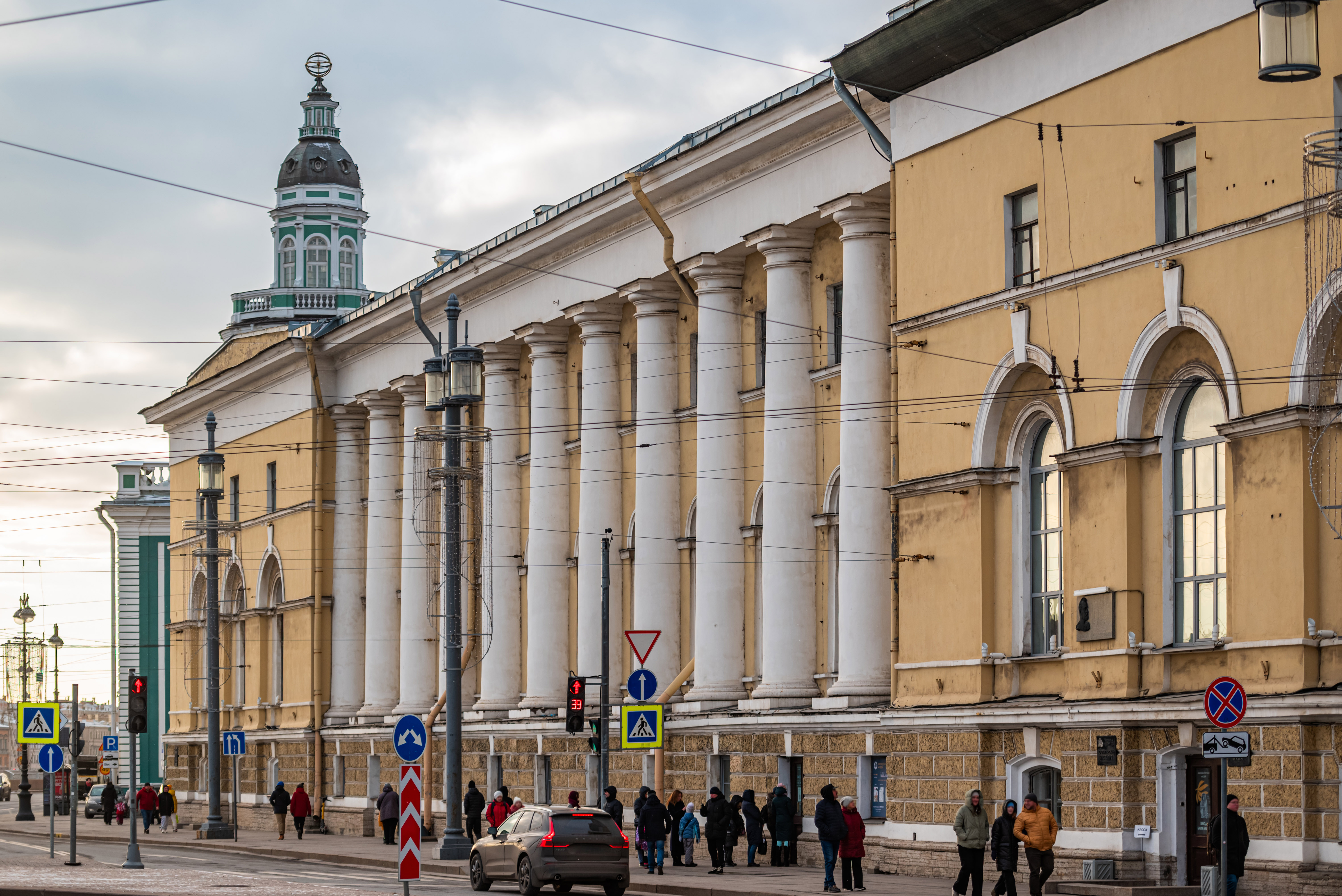
Zoological Museum of the Russian Academy of Sciences
One of the oldest and largest natural science institutions in Russia — Its paleontological exhibition is a separate hall where you can see what ancient animals looked like. It features skeletons of mammoths, woolly rhinoceroses, and cave bears, as well as imprints and fossils from different geological eras. Sculptures and paintings help to understand what the animals looked like when alive. Although the main focus is on the Quaternary fauna of Russia, there are also rare specimens from the Permian period and the Mesozoic Era.
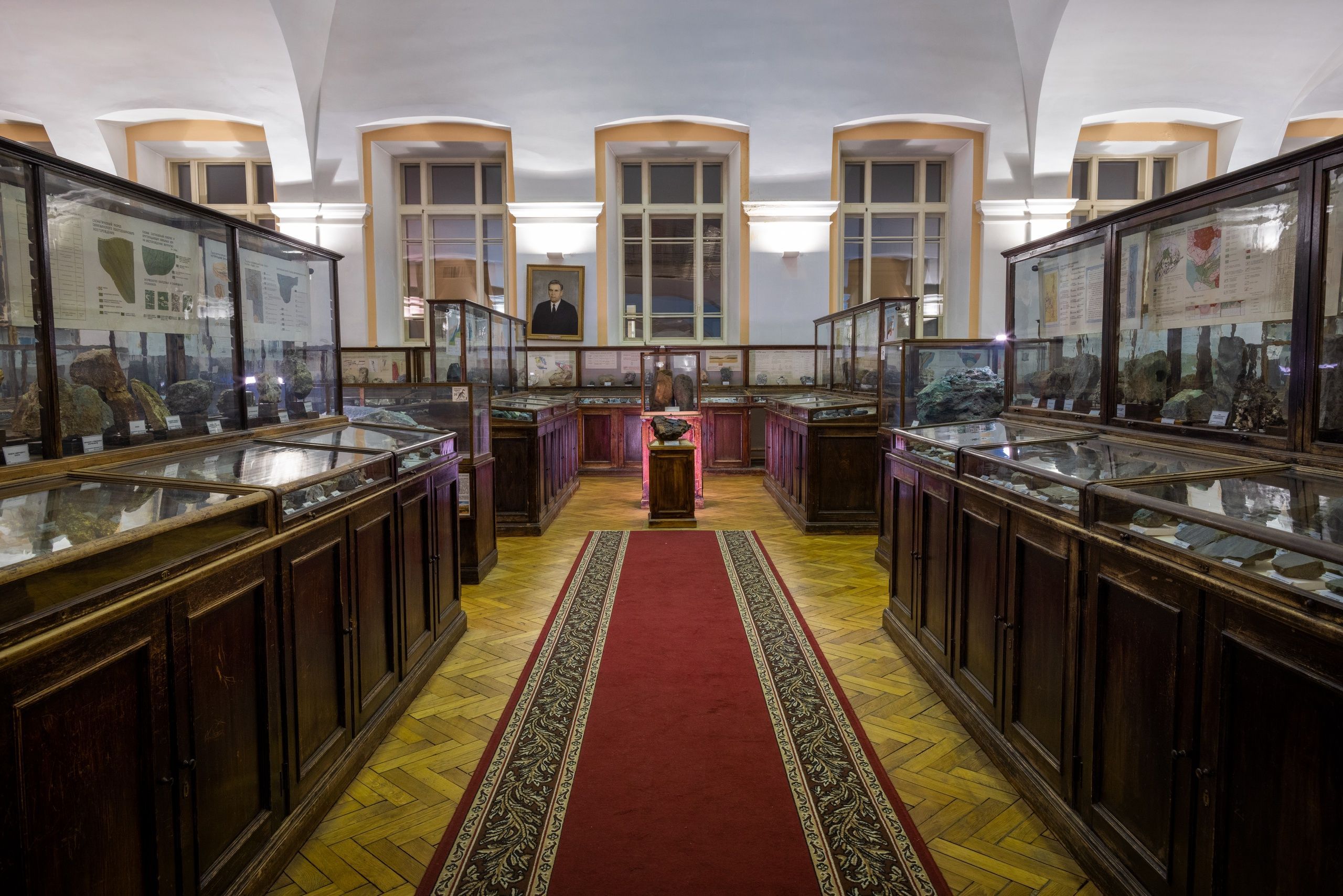
- Academician F.N. Chernyshev Central Research Geological Exploration Museum
One of the largest natural history museums in the world. It exhibits over 80,000 samples of minerals, rocks, ores, and fossil fauna and flora.
Many staff members have conducted and continue to conduct excavations in various regions of Russia and the world, bringing back new finds. The exhibition even includes a skeleton of a hadrosaur brought from the Far East over a hundred years ago.
- Paleo Hunters Private Museum
This is a private collection, open to both the public and buyers. It features a variety of fossils from all over the world, from stromatolites about 3.5 billion years old to megalodon teeth, from fern imprints to mammoth bones. In the museum, you can not only see the exhibits but also touch some of them and listen to a lively story about the history of life on Earth. Paleo Hunters makes paleontology accessible, tangible, and emotionally engaging.
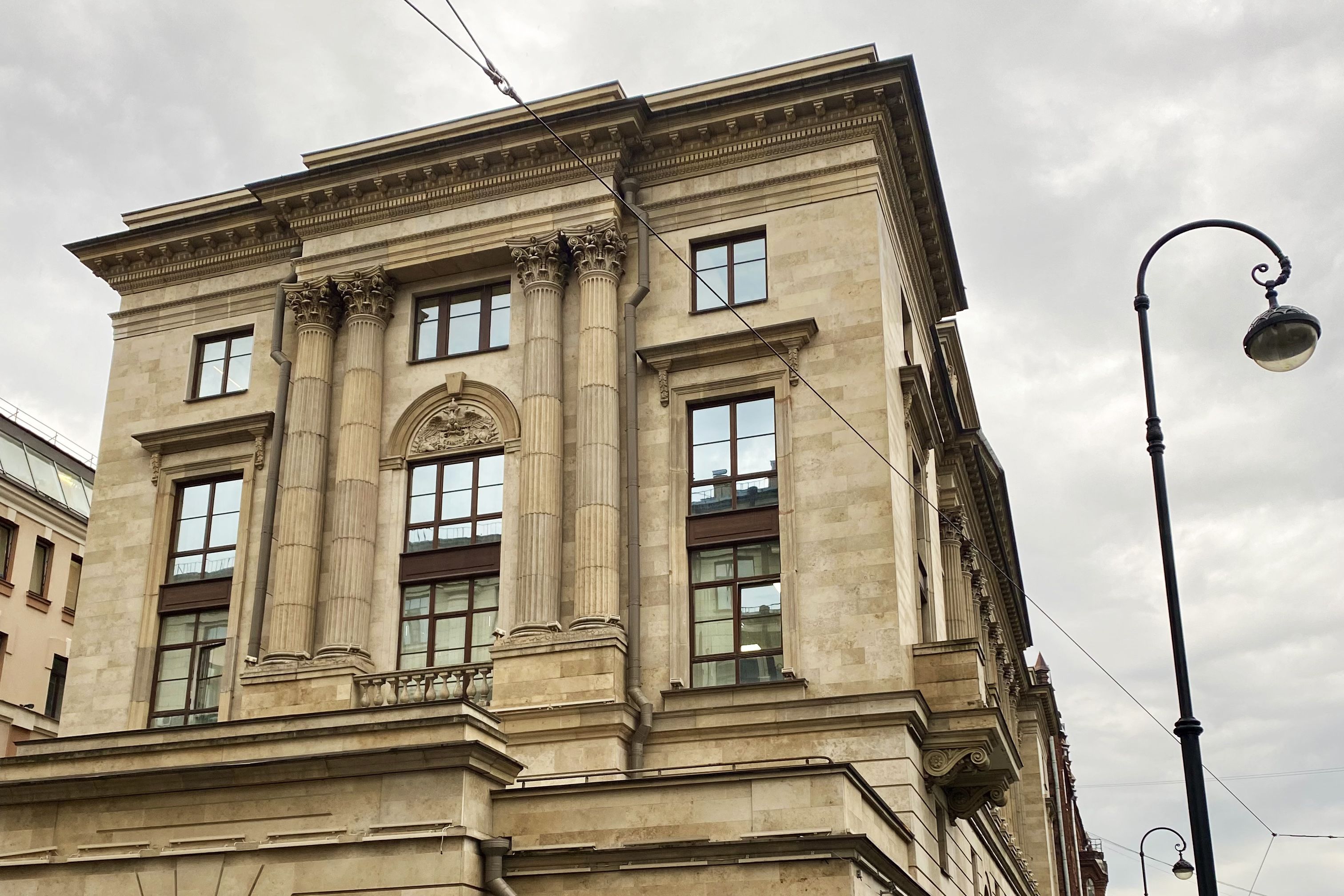
- Bolshoy Prospect of Vasilyevsky Island, 80P
The building's facades are clad in Jurassic-period marbleized limestone from Germany. Among the fossils, the spiraled shells of ammonites, the rostra of belemnites, and sea sponges forming irregular outlines are clearly visible.
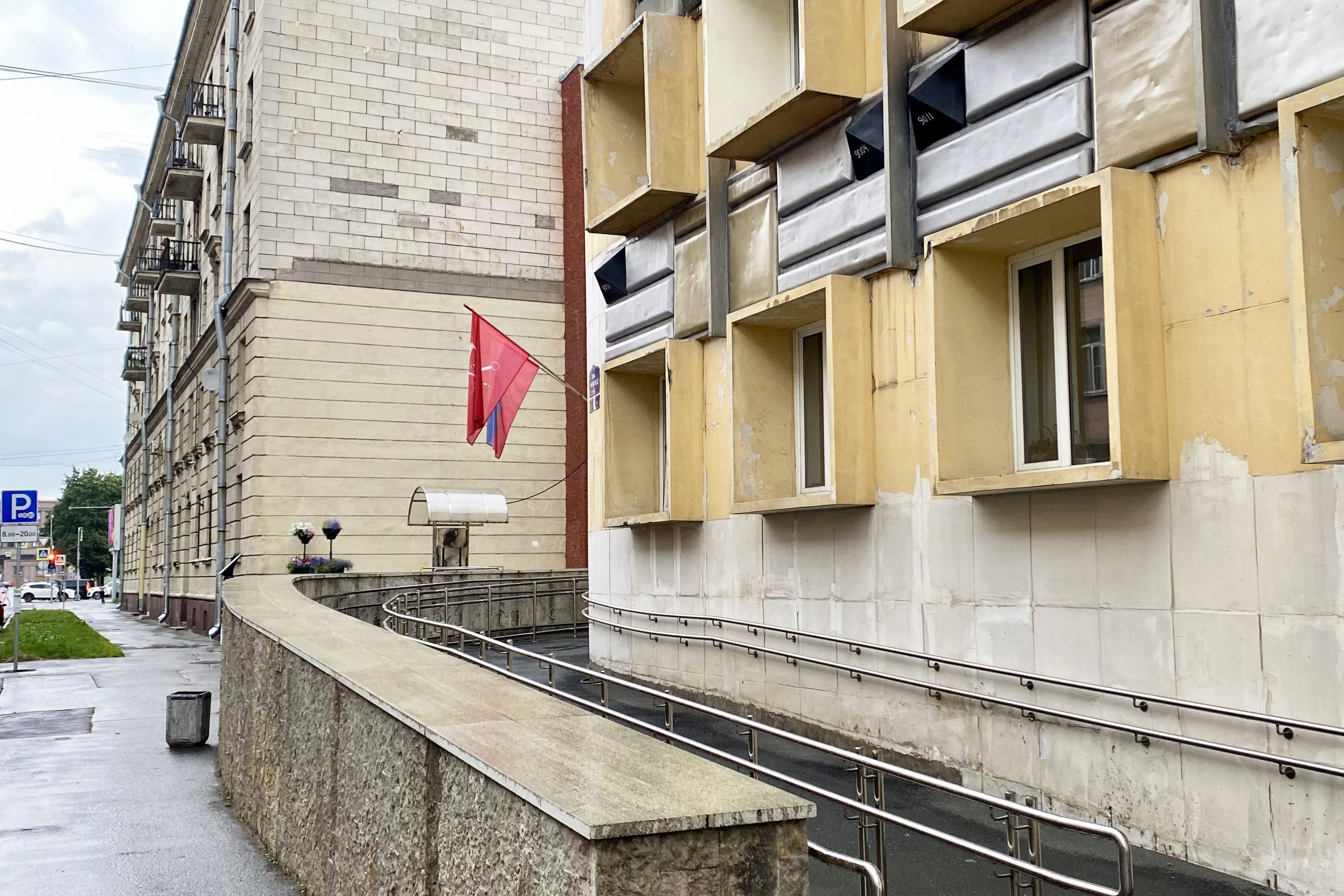
- 26th Line, Vasilyevsky Island, 9
The facades of the ramps are faced with Ordovician limestone, in which one can distinguish fragments of trilobite shells, casts of cephalopod shells, and in some cases, even fragments of crinoid stems replaced by white calcite. Furthermore, the textured shells of brachiopods and the surface burrows of worm-like organisms, visible in relief, stand out.
- Detskaya Street, 6
On the facade of this building, in individual limestone slabs, one can discern casts of cephalopod shells with distinct chambered structures and valves of brachiopod shells, the cavities of which are filled with a milky-white crystalline substance — calcite. The most attentive visitors will be able to find an ancient echinoderm — the sea bladder Echinosphaerites.
- Kozhevennaya Line, 40
Both the facade cladding and the floor covering are made of Putilovo limestone slabs. In addition to the elongated shells of cephalopods and fragments of trilobite shells, the individual ossicles (columnals) that made up the stems of sea lilies, resembling a scattering of snow-white beads, are clearly distinguishable.